METHOD 1: Melt & Pour (Easiest, Most Translucent)
This is what most people use for stained glass because:
✓ Naturally translucent/transparent
✓ Remeltable (forgiving for mistakes)
✓ No saponification wait time
✓ Holds crisp lines perfectly
What you need:
Clear glycerin melt & pour base (can be all-natural)
Black melt & pour for outlines
Soap colorants (micas, oxides)
Squeeze bottles or piping bags
Loaf mold or slab mold
All-Natural M&P Options:
Stephenson Organic Melt & Pour
SFIC Natural Clear Glycerin Base
Look for bases with: glycerin, coconut oil, palm oil (sustainable), water
METHOD 2: Cold Process (Your Tallow Base - More Challenging)
This is MUCH harder but possible with your tallow soap:
The Challenge:
CP soap is naturally opaque
You need VERY high water content to get translucency
Takes 4-6 weeks to cure before it becomes semi-transparent
Less forgiving - one mistake means rebatch
How to make CP translucent:
Formula adjustments:
Use 40-50% castor oil (creates translucency)
Add 50-100% extra water (makes soap "see-through" when cured)
Use minimal titanium dioxide
Soap at very low temperatures (90-100°F)
Example Translucent CP Recipe:
40% Castor oil
30% Coconut oil
20% Olive oil
10% Tallow (for hardness)
40% lye concentration (lots of water)
Cure 6-8 weeks minimum
What You Need for the Technique:
Squeeze bottles
Small piping bags or bottles
Sculpting tools or skewers
Slab mold or loaf mold
Freezer paper
Ingredients for Black Outlines:
Activated charcoal (all-natural black)
Black oxide (more intense, also natural mineral)
Make outline soap THICKER (less water) so it holds shape
Colorants for "Stained Glass" Effect:
Best for translucency:
Micas with transparency (not opaque ones)
Liquid soap dyes (if using M&P)
Oxide colorants (very small amounts)
Natural options: Alkanet root (purple), annatto (yellow/orange), spirulina (green)
Step-by-Step Process:
For Melt & Pour (Recommended):
Make black outline soap:
Melt clear M&P base
Add activated charcoal
Pour thin layer (1/4") in mold, let harden
Pipe/squeeze black lines to create "cells" for colors
Let harden completely
Fill colored sections:
Melt clear M&P in separate containers
Color each batch (blue, red, yellow, green, etc.)
Pour carefully into each "cell" between black lines
Use squeeze bottle or pour from measuring cup
Squeegee top to smooth
Let harden & unmold:
Wait 2-4 hours
Unmold and slice
Each slice shows the stained glass pattern!
For Cold Process (Advanced):
Make black outline soap first:
Make small batch with charcoal
Use THICK trace (like mashed potatoes)
Pipe into mold to create cells
Let sit 12-24 hours until firm
Make colored translucent soap:
High castor, high water recipe
Divide into colors
Pour at THIN trace into cells
Spray with alcohol between pours to prevent separation
Cure 6-8 weeks:
Wait for translucency to develop
Soap will become more see-through as it cures
My Honest Recommendation:
Start with all-natural Melt & Pour for stained glass technique:
Why:
✓ Immediate results (no 6-week wait)
✓ Can be all-natural (organic glycerin bases exist)
✓ Forgiving (can remelt mistakes)
✓ Actually looks like stained glass (translucent)
✓ Crisp, clean lines
✓ Less waste/frustration
Keep your tallow CP soap for:
Regular bar soap
Swirls and layers
Embeds in M&P stained glass (best of both worlds!)
Packaging
Hybrid Approach (Best of Both Worlds):
Make tallow CP soap embeds + M&P stained glass:
Make small tallow CP shapes (stars, hearts, flowers)
Cure them 4 weeks
Embed them IN the M&P stained glass cells
Result: Natural tallow soap pieces suspended in translucent "glass"
This gives you:
Your beloved tallow formula
The stunning visual effect
All-natural ingredients
Easy technique
Shopping List for Stained Glass M&P:
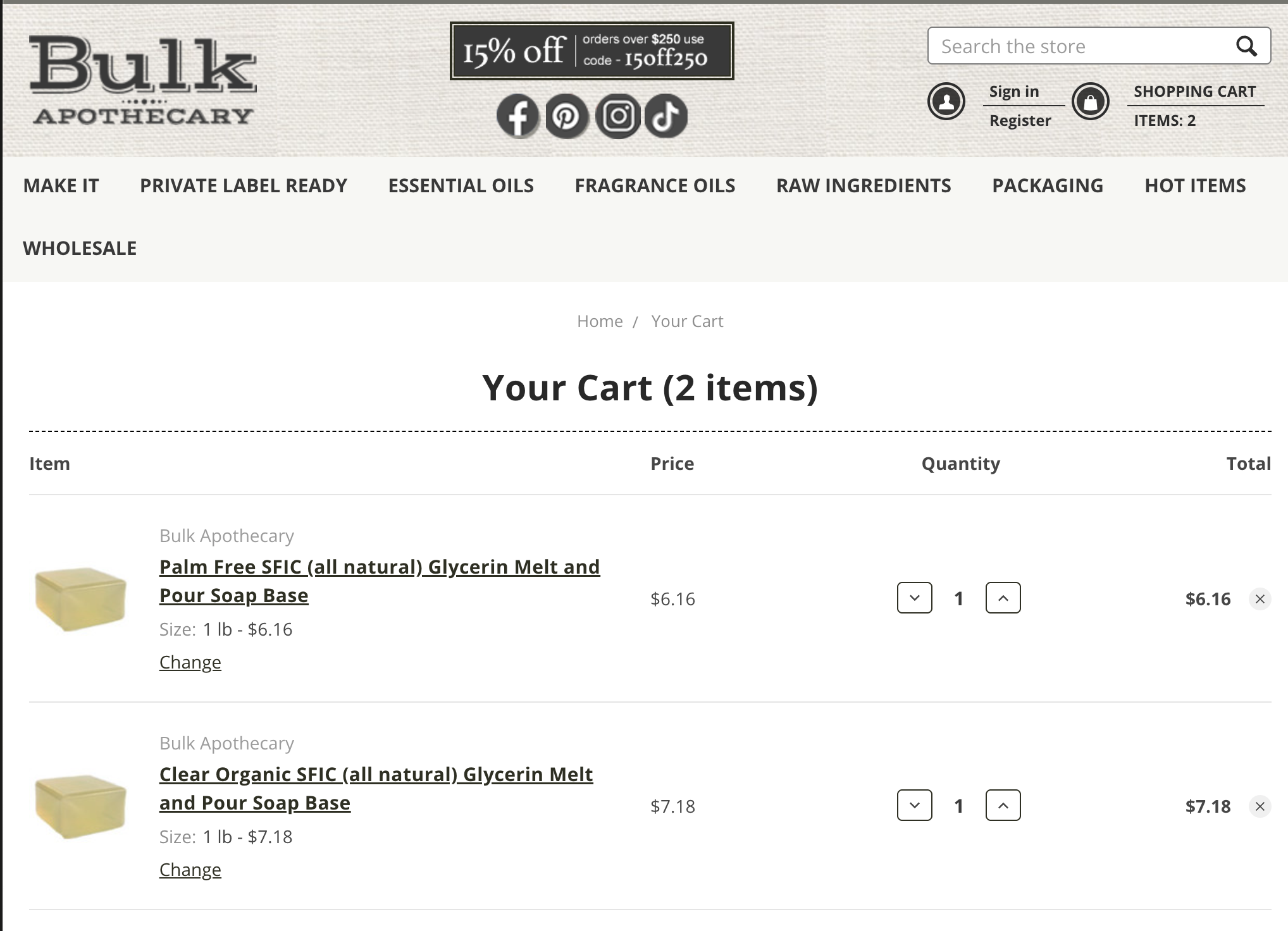
2-3 lbs clear glycerin M&P base (organic/natural)
1/2 lb white M&P base
Activated charcoal (for black lines)
3-5 mica colors or natural colorants
Squeeze bottles (3-4)
Loaf mold or slab mold
How to Make Your Own Melt & Pour Base
You essentially make hot process soap with extra glycerin and solvents to create the translucent, remeltable properties.
Basic DIY M&P Recipe (Makes ~2 lbs):
Oils:
Coconut oil: 227g (35%)
Castor oil: 195g (30%)
Tallow: 130g (20%)
Stearic acid: 97g (15%)
Lye Solution:
Lye (NaOH): 102g
Distilled water: 244g
Additives (what makes it M&P):
Glycerin: 195g (30% of oil weight)
Sugar solution: 65g sugar dissolved in 130g hot water
Alcohol (190 proof or 91% rubbing alcohol): 97g
Process:
Make hot process soap:
Mix lye + water, let cool
Melt oils to 160-180°F
Combine, stick blend to trace
Cook in crockpot on low 1-2 hours (until paste tests clear with zap test)
Add transparency agents:
While still hot (170°F+), add glycerin
Stir in sugar solution
Add alcohol slowly (will bubble!)
Stir constantly for 20-30 minutes
Pour and cure:
Pour into molds while still liquid (150-160°F)
Cover and let cool 12-24 hours
Cut into blocks
Cure 2-4 weeks for best translucency
Why It's Translucent:
Glycerin = solvent that clarifies
Sugar = additional solvent
Alcohol = dissolves soap crystals
High castor oil = naturally more translucent
Stearic acid = hardness without opacity
HOWEVER... The Reality:
DIY M&P is honestly quite difficult.
Recommendation: For stained glass, buy organic/natural M&P base. Save your energy for the actual art!
Black Outline Curing Time - CRITICAL INFO
This depends on which method you're using:
FOR MELT & POUR (What she's likely using):
Curing time before etching/adding colors:
StepTimeWhat's HappeningPour black outline0 minPipe/pour black M&P linesInitial set15-30 minBlack firms up enough to touchReady to fill30-60 minBlack is solid, won't move when you pour colorsFully hardened2-4 hoursReady to unmold/cut
Answer: 30-60 minutes before adding colored soap
How to test: Gently press the black line with your finger - if it doesn't dent or move, you're ready to fill!
FOR COLD PROCESS (if going that route):
Much longer:
StepTimeWhyPour black outlineDay 0Thick trace CP soapInitial setup12-24 hoursNeeds to be firm enough not to blend with new soapReady to fill24-48 hoursBlack is solid but soap is still "raw" so new soap will bondFull cure4-6 weeksFor use/translucency
Answer: 24-48 hours before adding colored CP soap
Critical timing: You want the black firm enough to hold shape, but still "raw" enough (uncured) that the new colored soap chemically bonds to it. If you wait too long (more than 3-4 days), the sections might separate.
The Actual Stained Glass Technique Timeline:
Using M&P (Recommended):
Day 1 - Morning:
Pour thin layer of clear M&P in mold (base layer) - wait 30 min
Pipe black outline lines to create cells - wait 30-60 min
Pour colored M&P into each cell - wait 2-4 hours
Unmold and slice - DONE!
Total time: 4-6 hours from start to finished soap
Using Cold Process (Advanced):
Day 1:
Make black outline soap (thick trace)
Pipe into cells
Let sit 24-48 hours
Day 2-3:
Make colored translucent CP batches
Pour carefully into cells at thin trace
Let saponify 24-48 hours
Unmold carefully
Week 6-8:
Soap is finally cured and translucent enough to see effect
Total time: 6-8 weeks from start to usable soap
Pro Tips for Timing:
M&P Stained Glass:
Don't rush the 30-60 min wait - if black is too soft, colors will blend
Don't wait too long - if black is completely cold, new layers won't stick well
Sweet spot: Black feels firm but mold is still slightly warm
CP Stained Glass:
Test firmness: Black should feel like firm cheese (not liquid, not rock hard)
Spray with alcohol between pours to help adhesion
Work fast once you start pouring colors - you want them all poured within 30 minutes
What Does "Etching Out" Mean?
I think you might be asking about two different techniques:
Technique 1: Flat Pour (No etching)
Pour black lines on flat base
Wait 30-60 min
Pour colors between lines
Slice - each slice shows pattern
Technique 2: Sculpted Cells (Actual etching)
Pour thick black layer (1/2")
Wait until firm (1-2 hours for M&P, 24 hours for CP)
Carve/etch out cells with tools (like carving pumpkins!)
Fill carved areas with colored soap
Slice - shows 3D stained glass effect
Is this what you meant? For the carved method:
M&P: Wait 2-4 hours before carving
CP: Wait 24-48 hours before carving
My Recommendation:
Start with M&P method:
Buy 2 lbs clear organic M&P base
Buy 1 lb white M&P base
Make black from white + charcoal
Practice the 30-60 minute timing
Perfect your technique
THEN try DIY M&P or CP if you want
Top Online Suppliers (US-based)
1. Stephenson Personal Care (Industry Standard)
Website: stephensonpersonalcare.com
Best for: Certified organic bases
Popular products:
Crystal OPC (Organic Clear) - USDA certified organic
Crystal OREF (Organic Clear Extra Firm)
Crystal OST (Organic Suspending - for embeds)
Ingredients: Organic coconut oil, organic palm oil, organic glycerin, organic shea butter
Where to buy: Directly or through retailers below
2. Wholesale Supplies Plus (WSP)
Website: wholesalesuppliesplus.com
Carries: Stephenson organic bases, SFIC natural bases
Pros:
Fast shipping
Small quantity options (1-2 lb blocks)
Frequent sales
Price range: $6-9/lb
3. Bramble Berry
Website: brambleberry.com
Carries:
Stephenson Organic Melt & Pour
SFIC (Soap & Fragrance Institute of California) natural bases
Pros:
Excellent for beginners
Great tutorials
Samples available
Reliable quality
Price range: $7-10/lb
4. Nature's Garden
Website: naturesgardencandles.com
Carries: SFIC natural bases, some organic options
Pros:
Competitive pricing
Bulk discounts
Good variety
Price range: $5-8/lb
5. From Nature With Love (FNWL)
Website: fromnaturewithlove.com
Carries: Stephenson organic bases
Pros:
Bulk organic options
Other natural ingredients too
Good for one-stop shopping
Price range: $6-9/lb
6. Amazon (Convenience)
Search for: "Stephenson Organic Melt and Pour"
Brands to look for:
Stephenson
Life of the Party (SFIC)
Crafters Choice
Pros:
Prime shipping
Small quantities
Read reviews
Cons:
Slightly higher prices ($8-12/lb)
Quality varies by seller
Price range: $8-12/lb
What to Look For:
True "Organic" Bases (Certified):
Stephenson Crystal OPC - This is THE gold standard
✓ USDA Organic certified
✓ Cosmos Natural certified
✓ Palm oil from sustainable sources
✓ No SLS/SLES
✓ Vegan option available
"Natural" Bases (Not certified but clean):
SFIC bases - Very good quality, natural ingredients
✓ No detergents (SLS-free)
✓ Glycerin, coconut, palm oils
✓ Not certified organic but clean formula
✓ More affordable than certified organic
Product Recommendations by Type:
For Stained Glass Soap:
Clear/White (organic) from Stephenson Crystal OPC, online @ Wholesale Supplies Plus & , Bramble Berry
What to order for stained glass:
2 lbs Stephenson Crystal OPC (clear organic) - $16-18
1 lb Stephenson Crystal OSW (white organic) - $8-9
Activated charcoal (for black) - $3-5
Ingredient Comparison:
Stephenson Organic (OPC):
Organic Coconut OilOrganic Palm Oil (sustainable RSPO)Organic GlycerinOrganic Shea ButterPurified WaterSorbitol (from organic sources)Sodium Hydroxide
Hybrid Method: CP/HP Base + M&P Colors
The Setup:
Make carved base: Your tallow CP soap (or any CP/HP soap) - black or white
Carve the design: Wait until firm, carve out cells
Fill with colored clear M&P: Buy just clear organic M&P, add colors, pour into carved cells
Why This is GENIUS:
✓ Use soap you already know how to make (your tallow recipe!)
✓ Only buy clear M&P (cheaper - just 1-2 lbs needed)
✓ Best of both worlds: Natural CP base + translucent M&P colors
✓ Easier carving: CP soap carves beautifully when timing is right
✓ More forgiving: If carving goes wrong, rebatch the base
✓ Your formula: Keep using your beloved tallow soap
The Process - Step by Step:
Step 1: Make Your Carving Base (CP or HP)
Best soap for carving:
Option A: Your Regular Tallow CP Recipe
Make it BLACK with activated charcoal (1-2 tsp PPO)
Or leave WHITE/CREAM (natural color)
Pour into slab mold 1-1.5" thick
Make it WIDE and LONG (think sheet cake pan)
Easier-to-Carve CP Recipe
If you want soap that's specifically easy to carve:
Firm Carving Recipe:
40% Tallow (firmness)
30% Coconut oil (hardness)
20% Olive oil (workability)
10% Castor oil (smooth carving)
5% superfat
33% lye concentration (firmer soap)
Pour into the slab about 1-1.5" deep
Makes soap that:
✓ Holds crisp edges when carved
✓ Doesn't crumble
✓ Not too hard, not too soft
✓ Perfect "carving window", within 12 to 36 hours (18 to 30 specifically good)
Prepare Carved Soap for Filling
After carving (same day):
Let carved soap sit another 12-24 hours
Firms up more
Surface oxidizes slightly (helps M&P stick)
Cells dry out
Optional: Spray with alcohol
Helps M&P adhere to CP
Cleans any soap debris from carving
Keep at room temp
Don't refrigerate
M&P bonds better to room-temp soap
Fill with Colored M&P
What to buy:
2 lbs clear organic M&P (Stephenson OPC)
Soap colorants (micas or oxides)
That's it!
Process:
Melt M&P in microwave:
30-second bursts
Stir between
Don't overheat (160-170°F max)
Divide and color:
Pour melted M&P into separate containers
Add colors (mica, oxide, natural colors)
Blue, red, yellow, green, purple - whatever you want!
Pour into carved cells:
Pour slowly to avoid air bubbles
Fill slightly overfull
Spray with alcohol if bubbles appear
Let each color set 10-15 min before adding next (if cells touch)
Let harden completely:
2-4 hours at room temp
Don't rush this!
Smooth the top (optional):
Once M&P is hard, you can:
Leave as-is (textured look)
OR plane/shave the top flat with knife
OR pour thin layer of clear M&P over everything
Step 6: Cut and Cure
Cutting:
Wait 24 hours after filling
Cut with sharp knife or soap cutter
Each slice reveals the stained glass pattern!
Wipe blade between cuts for clean edges
Curing:
Even though M&P is "done," the CP base still needs curing
Cure 4-6 weeks total from when you made the base
The M&P sections are ready immediately, but CP needs time
Example Timeline:
Day 0 (Monday):
Make black/white CP tallow soap base
Pour into slab mold 1" thick
Day 1 (Tuesday afternoon, ~24 hours later):
Test firmness - should feel like firm cheese
Carve design into soap
Let sit to firm up more
Day 2 (Wednesday):
Melt clear M&P
Add colors
Pour into carved cells
Let harden 2-4 hours
Day 2 Evening:
Cut into bars
Reveals stained glass pattern!
Week 4-6:
CP base fully cured
Soap ready to use