
Wetting your hair BEFORE getting into chlorine reduces up to 50% of the chlorine absorbed.
Hair is like a sponge
dry hair = absorbs chlorinated water
wet hair = already full → absorbs less
Reduce chlorine uptake BEFORE it happens + neutralize what does get in.
Vitamin C (in the form of Sodium Ascorbate) neutralizes chlorine. It essentially converts chlorine into harmless salts. It stops damage to hair proteins, color, and scalp.
(BEST PRACTICE)
BEFORE POOL:
Wet hair thoroughly
Light conditioner on ends (especially for long/curly)
Apply vitamin C spray
AFTER POOL:
Shampoo bar
Conditioner
Best part, in making this, 👉 No heat needed at all ✅
Simple and Safe Spray (Kid-Friendly)
Enough for 2x 2oz batches (or single 4oz)
Double Batch, 8oz
Distilled water, 221.4g
Sodium Ascorbate, 4.8g
Glycerin, 7.2g
Panthenol, 2.4g
Geogard, 2g
Lasts ~2–3 months at room temperature.
a family of 4 like ours will likely use it up in 2–4 weeks
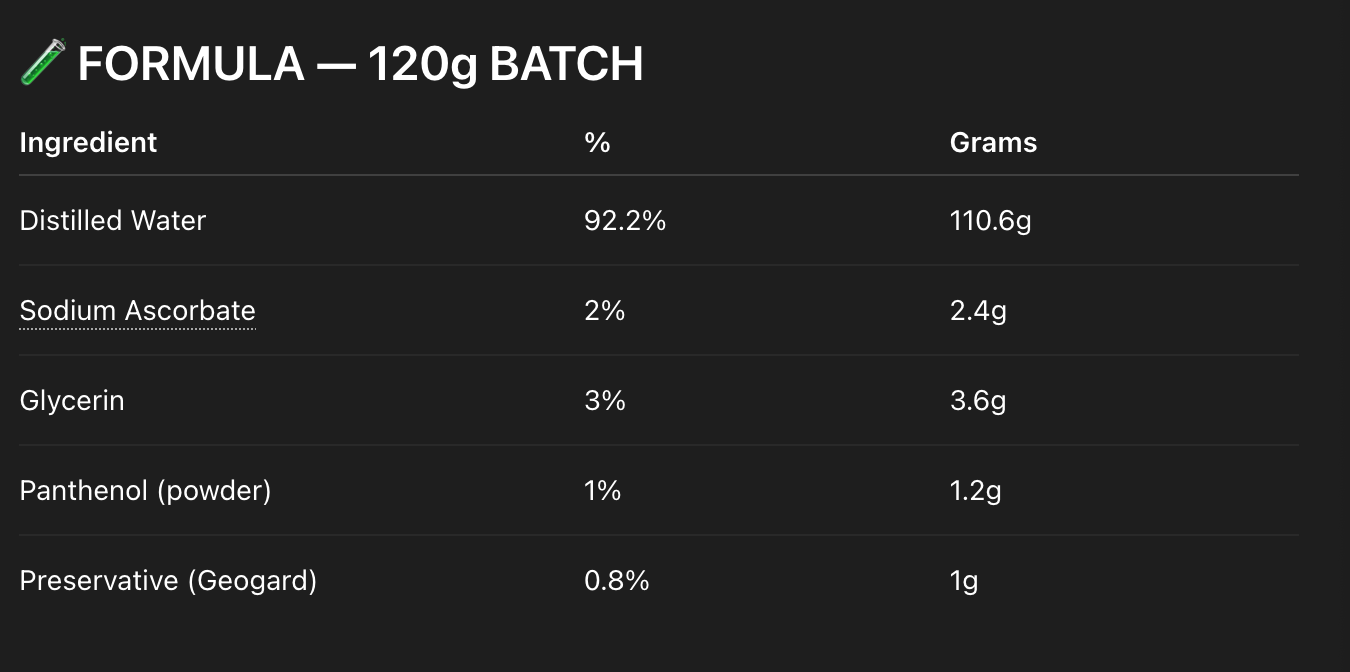
Why this works:
Sodium ascorbate → chlorine neutralization
Glycerin → prevents dryness
Panthenol → light conditioning
Preservative → safety
🔧 HOW TO MAKE
Add sodium ascorbate to water
Stir until fully dissolved
Add glycerin + panthenol
Add preservative
Bottle in spray bottles
Shelf life
~2–3 months with preservative
store cool, out of sunlight
Use
spray lightly on damp hair
focus on mid-length + ends
💡 EXTRA POOL TIPS (YOU’RE ALREADY DOING GREAT)
✔ Wet hair first
✔ Conditioner on ends
✔ Rinse ASAP after pool
✔ Use your shampoo bar
Can you use this spray on dry hair?
👉 You can, but it’s not the best method. You still want to saturate the hair with clean water before chlorine water. Spray wont block chlorine. It just aids in protection, and helps to neutralizes chlorine that does contact hair.
1. Wet hair thoroughly (most important step)
saturate with clean water
reduces chlorine absorption dramatically
2. Optional: light conditioner on ends
especially for:
long hair
curly hair
kids
👉 creates a slight barrier + slip
3. Vitamin C spray
apply to damp hair
focus:
mid-length
ends
Best realistic routine:
quick rinse at pool shower
quick spray (A light mist on hair is totally fine)
jump in
🧪 Why it’s safe for pools
Your spray contains tiny amounts of: Sodium Ascorbate, glycerin and panthenol. This is tiny compared to total pool volume. Pools are meant to handle even sunscreen, sweat and lotions, and this is far less impactful. This formula is actually cleaner than most shampoos and conditioners on the market.
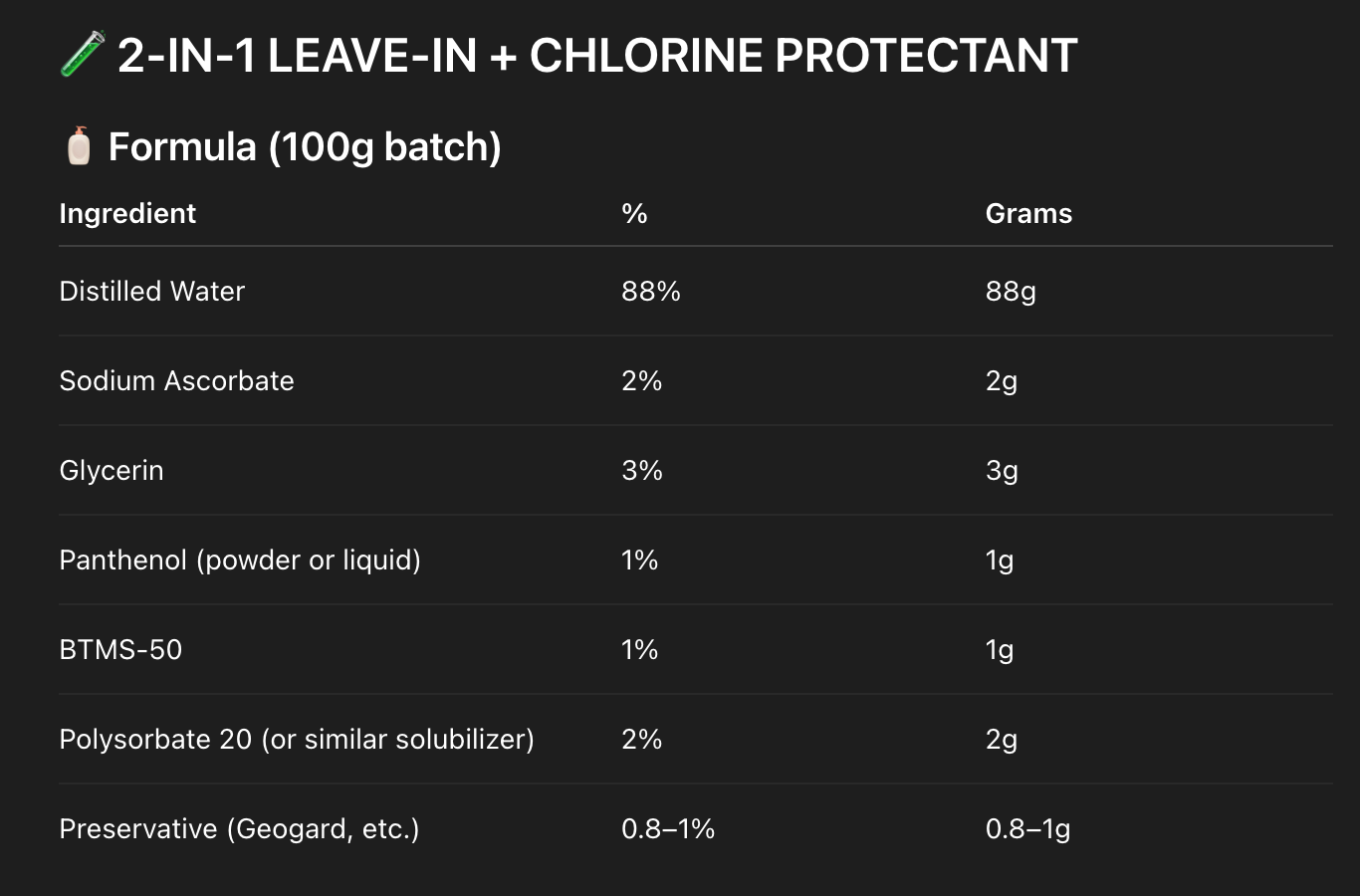
To tweak it into a leave-in conditioner hybrid spray (very popular product direction):
🔧 How to make
Step 1 — Heat phase
Heat water + BTMS to ~140°F until melted
Step 2 — Cool to ~110°F
Step 3 — Add:
sodium ascorbate
glycerin
panthenol
polysorbate
Step 4 — Add preservative
Step 5 — Mix + bottle
👉 Shake before use (light emulsion)
⚠️ Keep it light
Don’t over-apply:
👉 more is NOT better
too much = slippery hair
potential pool residue
The simple vitamin C spray is the most effective and straightforward option for protecting hair from chlorine. It works because sodium ascorbate directly neutralizes chlorine on contact, which is really the main goal. It’s lightweight, easy to make, and doesn’t leave any residue on the hair. That means it won’t cause buildup over time, won’t weigh hair down, and won’t interfere with how clean the hair feels after swimming. It’s also the gentlest option for kids and daily use, since it contains very few ingredients and doesn’t rely on conditioning agents that can accumulate.
The downside of the simple spray is that it doesn’t add much in terms of conditioning or softness on its own. It protects the hair, but it doesn’t actively smooth or detangle. That said, this is easy to solve by just applying a small amount of conditioner to the ends before swimming, which gives targeted protection where it’s actually needed (especially for longer or curly hair) without affecting the whole head.
The 2-in-1 leave-in spray adds conditioning ingredients like BTMS, which can make hair feel softer and more manageable, particularly for longer or drier hair. This can be helpful if someone wants an all-in-one product and doesn’t want to think about separate steps. However, the tradeoff is that it introduces more complexity and a higher chance of buildup over time, especially with frequent use. On finer or younger hair, this can eventually make hair feel heavier or slightly coated. It also adds more ingredients going into the pool, which isn’t harmful but is less minimal.
Overall, both options protect against chlorine equally well, since that function comes from the vitamin C. The difference is really about simplicity versus added conditioning. For everyday use—especially for kids—the simpler spray plus a small amount of conditioner on the ends is likely the best balance: it’s effective, gentle, low-maintenance, and avoids unnecessary buildup.