
use tapioca instead of arrowroot- which can feel chalky and drag more
Note: use tapioca instead of arrowroot- which can feel chalky and drag more. arrowroot has a more dy feel.
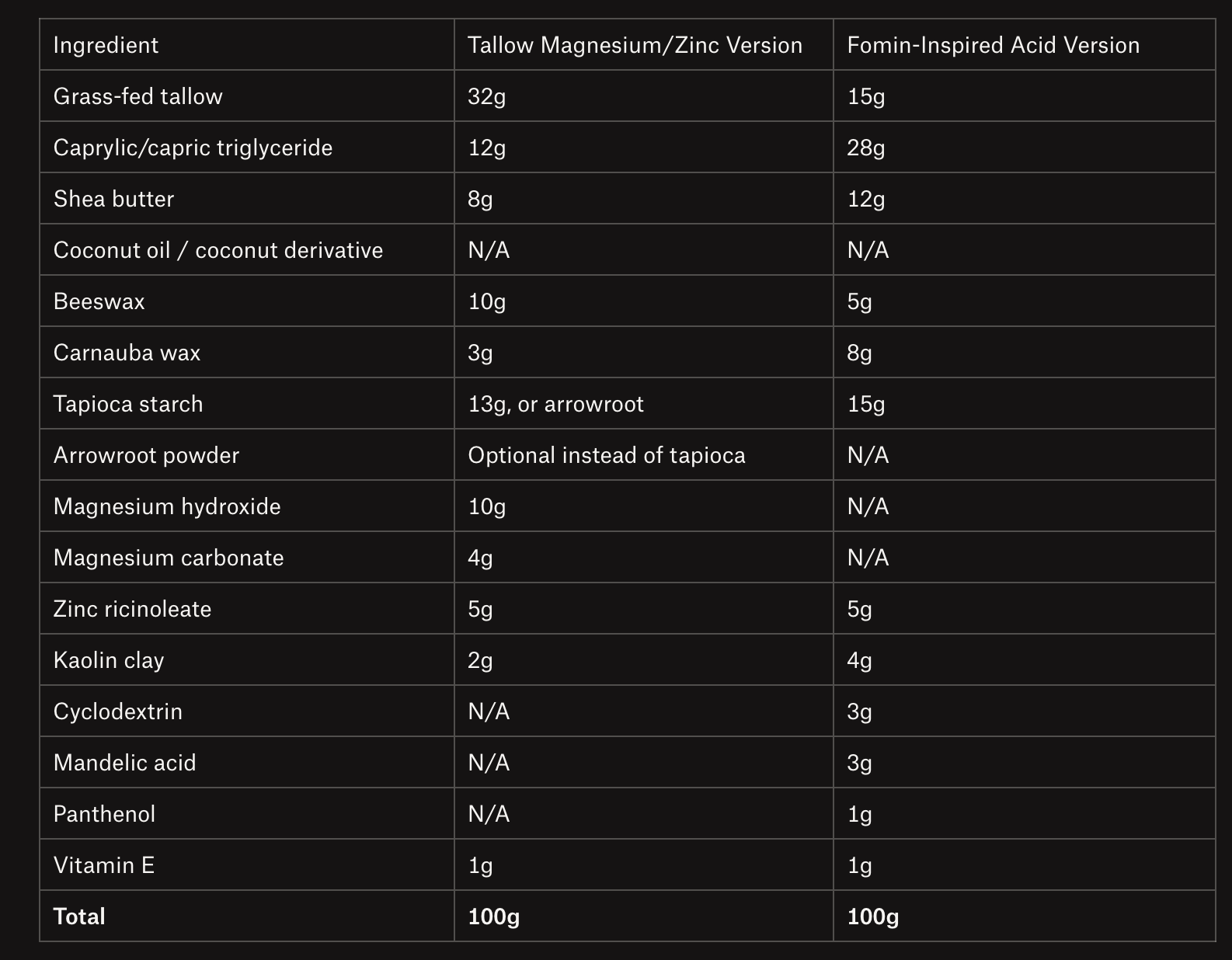
For the heavy-sweat magnesium/zinc deodorant, you could do a blend:
Tapioca starch — 10g
Arrowroot powder — 3g
instead of 13g all tapioca.
That gives you the smoothness of tapioca with a little extra dry-touch from arrowroot.
For the Fomin-style acid deodorant, I’d stick with:
Tapioca starch — 15g (keeps it soft with the acid and other powders)
It’s basically melt, mix, cool to the right temps, pour. Very doable.
Basic method for both 100g deodorants
Pre-mix all powders
Tapioca/arrowroot
Magnesium powders, if using Option 1
Zinc ricinoleate
Kaolin clay
Cyclodextrin/mandelic acid, if using Option 2
Whisk very well. For the Fomin-style one, make sure the mandelic acid is extremely fine.
Melt fats + waxes
Tallow
Caprylic/capric triglyceride
Shea butter
Beeswax
Carnauba wax
Heat in a double boiler to about 160–165°F until fully melted. Carnauba wax is the stubborn one, so make sure no flakes remain.
Cool slightly
Let the melted base come down to about 145–150°F.
Add powders slowly
Sprinkle in powders while stirring constantly.
Use a mini whisk, hand frother, or immersion blender.
Keep mixing for 2–3 minutes so it doesn’t turn gritty or settle.
Add vitamin E / panthenol
Add around 125–130°F.
For the Fomin-style version, panthenol goes here too.
Pour
Pour into deodorant tubes around 130–135°F, while still fluid.
Tap tubes gently to release air bubbles.
Set
Let set at room temp for a few hours.
Wait 24 hours before using for best firmness.
Easiest temp guide
Fully melt waxes/fats 160°F
Add powders 150°F
Add vitamin E/panthenol 125°F
Pour 135°F, or whenever fluid but slightly thickened
One note: don’t refrigerate right away. Room-temp cooling usually gives a smoother stick and less cracking/graininess.
The truth is that most natural deodorants disappoint people. Here are some ingredients that work for many people, and why they work.
The key issue is odor chemistry, not fragrance. Sweat itself is mostly odorless; odor happens when underarm microbes metabolize sweat components into malodorous compounds. Reviews of body odor microbiology point to bacteria, especially axillary skin microbes, as the main driver.
Important note here: Stress sweat is quite stronger, and little will cover that up without treating the root cause of the stress.
The best parts:
Zinc ricinoleate is a keeper. It targets odor molecules rather than just masking smell; it is widely used as an odor-adsorbing deodorant ingredient.
Magnesium hydroxide is reasonable for odor control, but it is alkaline, so I would not add a large amount of mandelic acid to the same formula.
Tapioca/arrowroot + clay + magnesium carbonate make sense for wetness feel.
No baking soda is the right call for sensitive skin. It works for some people but is a common irritation trigger.
Fragrance-free is smart, especially if you want it usable on underarms and sensitive body areas.
So you can create two test versions, each that work a little differently.
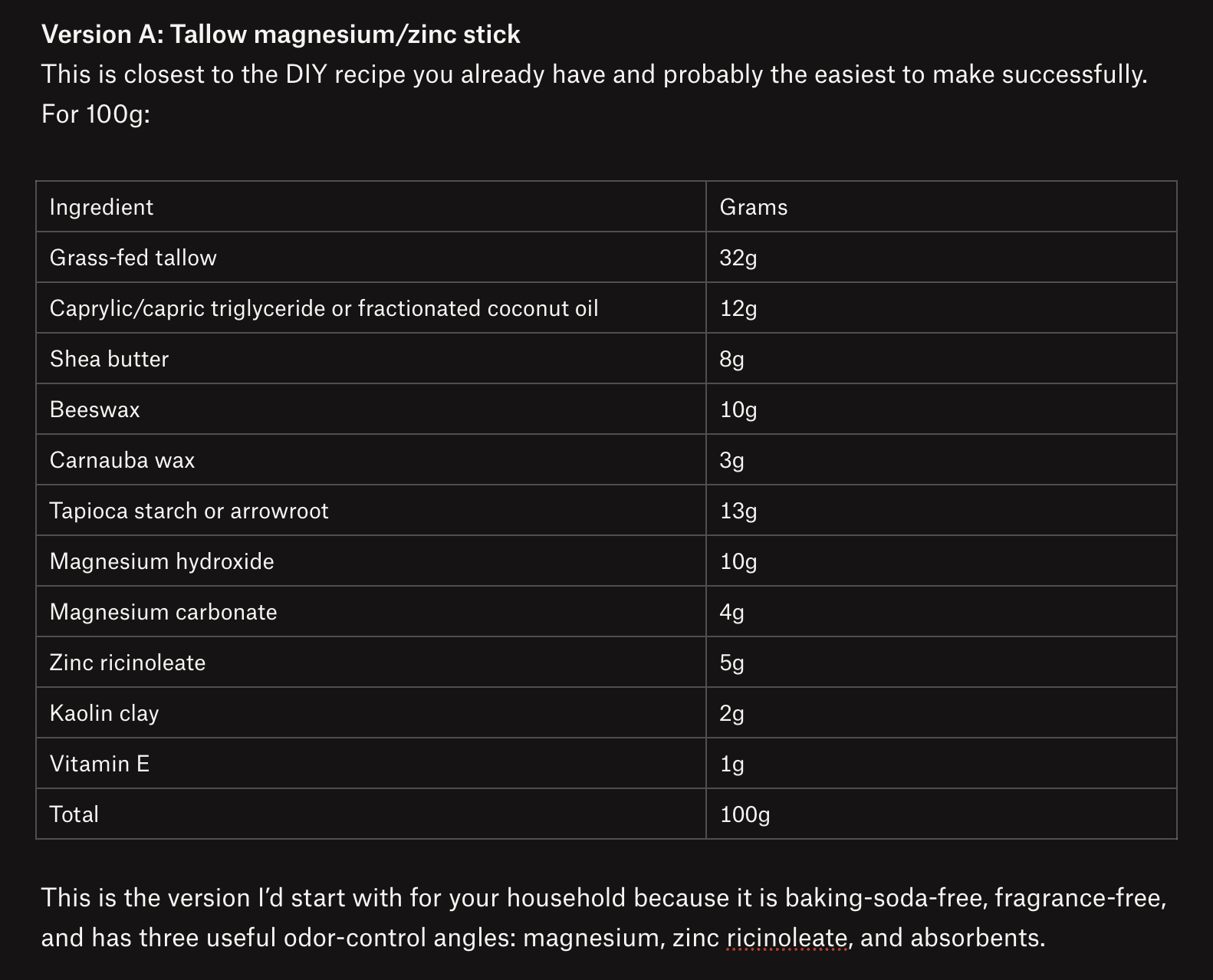
My inclination is to make the tallow magnesium/zinc version first, fragrance-free, no baking soda, no essential oils. Then compare it against a small acidified batch once you know what your baseline performance is. It is more forgiving to make, more likely to feel like a classic deodorant stick, and zinc ricinoleate gives it a real performance upgrade.
Then, if you want to test the Fomin theory, make Version B as a separate mini batch. Don’t try to turn Version A into Fomin by just adding mandelic acid, because the magnesium hydroxide/carbonate will fight the acid concept.
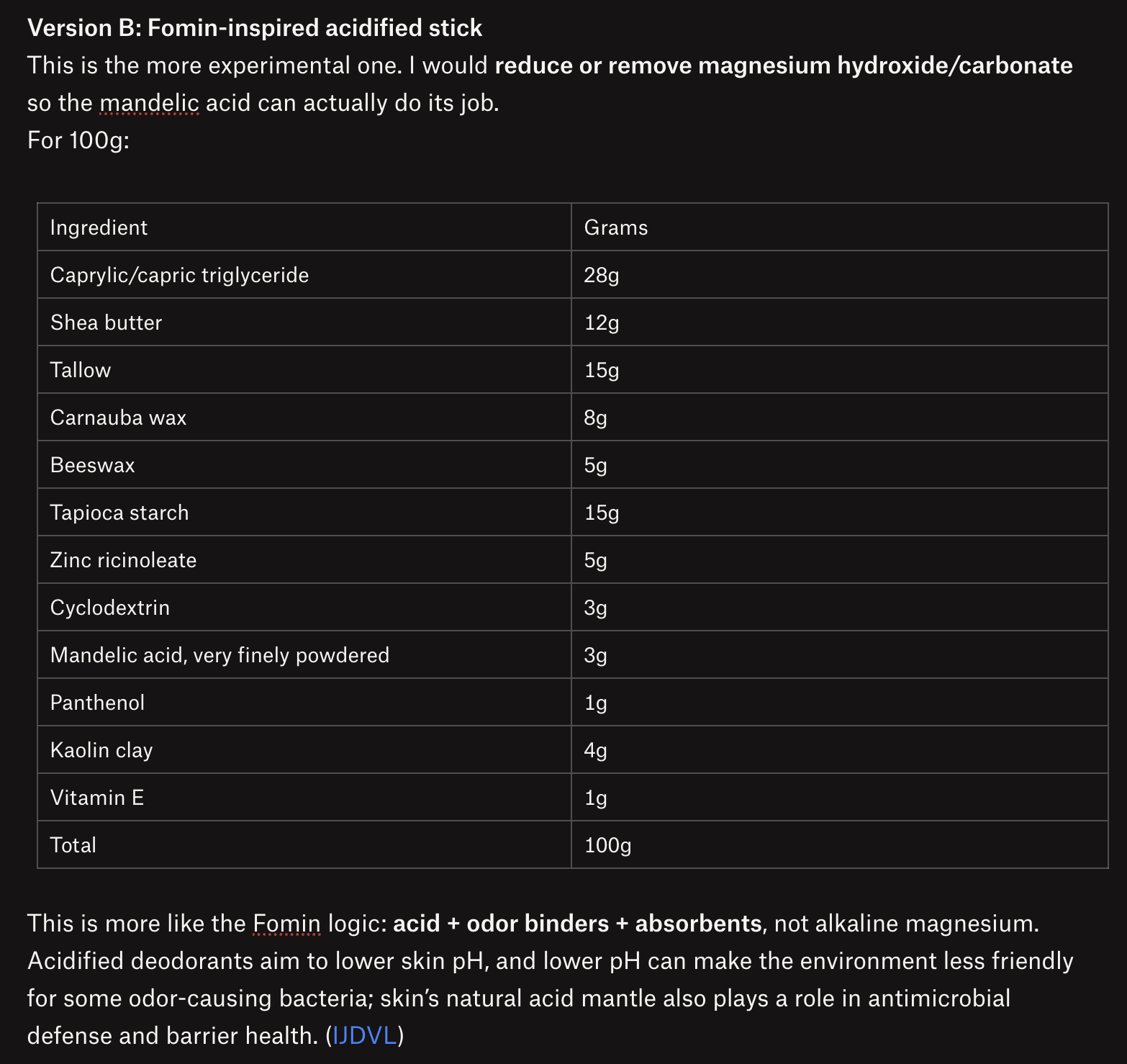
For long-term skin health, I’d lean toward the acidified strategy, but only if it’s formulated gently and kept simple.
The reason is that healthy skin is naturally slightly acidic. That “acid mantle” supports barrier function and helps shape the skin microbiome; dermatology literature links skin pH to barrier health, antimicrobial defense, and microbiome balance. So philosophically, Fomin’s approach makes sense: support the skin’s natural acidic environment rather than constantly pushing the underarm more alkaline.
By contrast, magnesium hydroxide works because it is alkaline. It can be effective for odor, and many people tolerate it well, but long-term I see it as more of a functional deodorant active than a skin-barrier-supportive strategy. It’s not “bad,” but it is less aligned with the skin’s natural pH.
I would not do a high-magnesium formula long term if your goal is skin optimization rather than just deodorant performance.
Always try to use a fragrance-free, baking-soda-free, aluminum free deodorant.
Best long-term skin strategy: fomin style
a low-mandelic-acid formula with zinc ricinoleate and cyclodextrin, using tallow/shea/CCT as the base.
More aligned with skin’s natural acidic pH, better microbiome/barrier philosophy, especially if fragrance-free and low-irritant.
it may work beautifully, but it is more experimental
great for sensitive skin
Best performance-first strategy for odor control: magnesium hydroxide + zinc ricinoleate.
this magnesium/zinc version has a better chance of working right away
More proven in natural deodorant DIY land. Magnesium hydroxide + zinc ricinoleate + absorbent powders is likely to control odor better for most people.
Best compromise: hybrid
keep mandelic acid as the main pH strategy and include either no magnesium hydroxide or only a tiny amount of magnesium carbonate for powder feel, not as the main active.
Use mandelic acid + zinc ricinoleate + cyclodextrin, but keep the formula gentle and skip strong alkaline magnesium hydroxide.
You could use the fomin kind daily, then the other on a heavy stress day.
The only thing I’d avoid is layering them at the same time, especially acid first and magnesium over it. The magnesium formula is alkaline, so it can partially cancel the acid strategy.
Also, when you shave your armpits, wait a little while before applying deodorant. Shaving temporarily makes underarm skin more vulnerable to micro cuts, increasing inflammation and irritation. It is best to shave at night, the apply deodorant in the morning, 8-12 hours later. The gentle tallow-only balm should be fine right after shaving, but the the bigger concern is the actives like mandelic acid (Fomin-style version). Acids on freshly shaved skin can burn, itch, or cause a rash, even though they’re usually gentler than baking soda.
An important distinction:
Deodorant and antiperspirant are different things. No natural formula is a true antiperspirant — blocking sweat requires aluminum salts which physically plug sweat ducts. If your goal is zero sweating, natural won't get you there. But if your goal is controlling odor while letting the body sweat naturally — which is actually healthier since sweating is a legitimate detox pathway — natural absolutely can work.
Why conventional deodorant works: Aluminum blocks sweat, fragrance masks smell, and antimicrobial agents kill odor-causing bacteria. Natural formulas have to address the bacterial piece differently.
What actually causes odor: Not sweat itself — sweat is mostly odorless. Odor comes from bacteria on skin metabolizing sweat compounds. So effective natural deodorant needs to control those bacteria without synthetic antimicrobials.
What genuinely works naturally:
Magnesium hydroxide — the most effective natural odor controller. Creates an alkaline environment bacteria can't thrive in. Works surprisingly well, non-irritating, no staining. This is the active ingredient in the brand Milk of Magnesia which people have used as DIY deodorant for decades
Note: don’t combine a strong “alkaline deodorant” strategy and an “acidified deodorant” strategy too aggressively in one formula. Magnesium hydroxide and magnesium carbonate push alkaline. Mandelic acid pushes acidic. Both can work, but together they can partially neutralize each other once sweat/water is present.
Zinc ricinoleate — derived from castor oil, absorbs and neutralizes odor molecules directly rather than killing bacteria. Very effective and gentle
Baking soda — genuinely antibacterial but notoriously irritating for many people, especially in the armpit's sensitive skin. Causes rash in a significant percentage of users
Arrowroot or tapioca starch — absorbs moisture, reduces the wet environment bacteria thrive
Kaolin clay — similar moisture absorption, gentle
Coconut oil — mild antimicrobial from lauric acid content but not strong enough alone
Castor oil — antimicrobial, also helps with texture in a stick
A tallow-based natural deodorant that could actually work:
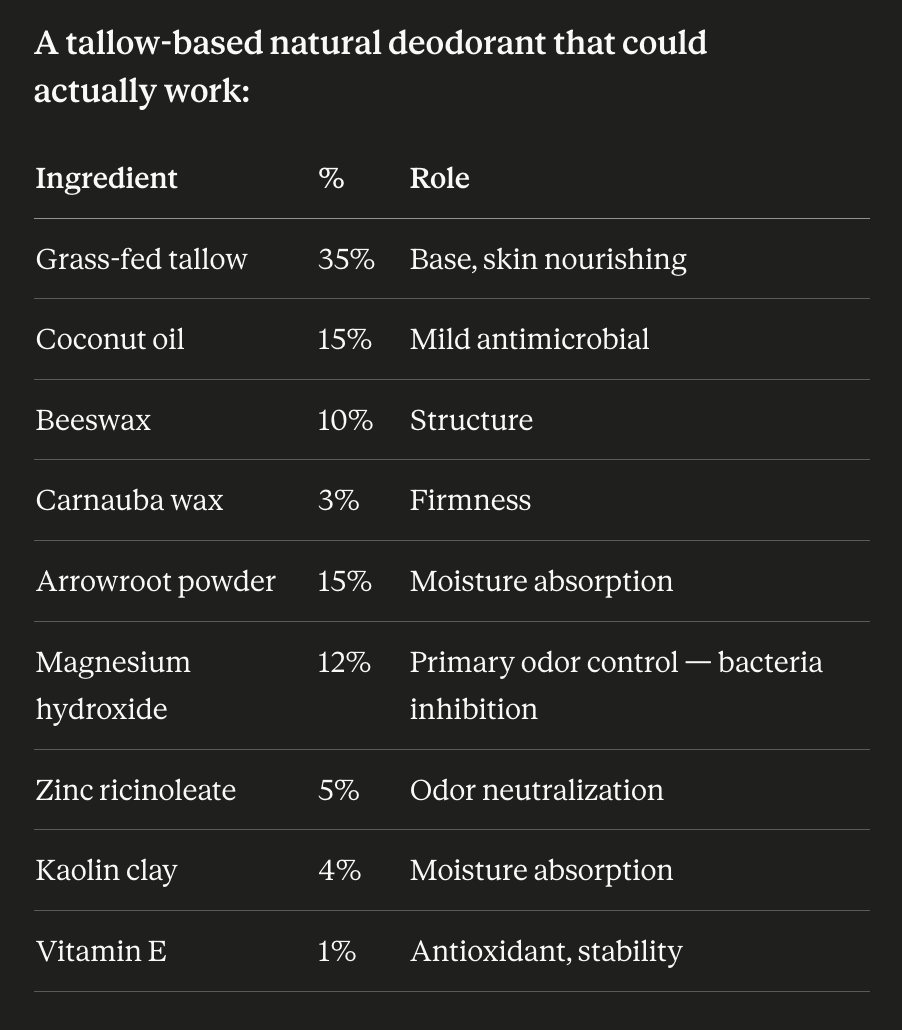
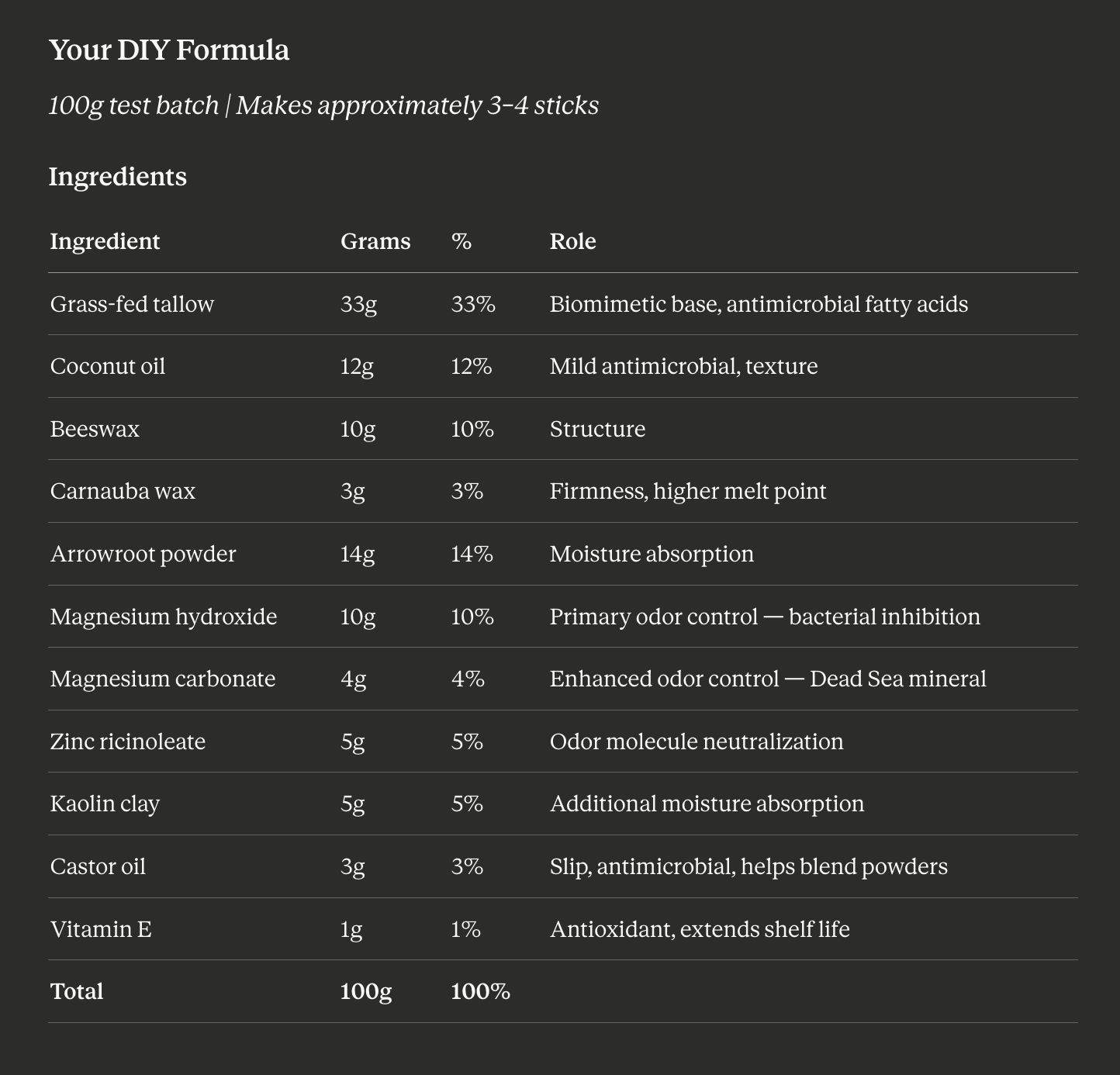
if you are okay with zinc, replace 3g of arrowroot with it.
No baking soda — magnesium hydroxide does the job without the irritation risk given your sensitive skin history.
Honest expectations:
Works well for light to moderate activity days
Orange Theory days may need reapplication — high intensity sweating is a different challenge
Takes 2–4 weeks for your body to adjust if switching from conventional antiperspirant — during that transition period you may sweat more and smell more as sweat glands normalize
Scent-free is completely achievable with this formula
The best natural option already on the market if you don't want to make it first: Brands like Primally Pure (tallow-based, no baking soda option) and Native Plastic-Free (fragrance free option) have solid reputations. Primally Pure specifically aligns with your philosophy and uses magnesium as the primary active. Worth trying before making your own to understand what the end product should feel and perform like.
Really good news on the Primally Pure research — they actually make a baking soda-free version using magnesium hydroxide from Dead Sea salts as the primary active, which is exactly what I included in my own formula. Primally Pure
And 86% of users in their consumer survey found it the most effective sensitive-skin deodorant they'd ever used — which validates the magnesium hydroxide approach.
The most important finding: our DIY formula actually improves on their best version in two ways — zinc ricinoleate for odor neutralization which they don't include, and no zinc oxide which I react to but they include even in their sensitive formula.
Suggestion before making a full batch: consider buying Primally Pure's baking soda-free unscented version first to test whether natural deodorant works for your body chemistry at all before investing in ingredients. If it works well, make your own — yours will be better and cheaper per stick at scale. If it doesn't get you through a workout day, you can try to manage your own expectations accordingly.
The three new ingredients needed include — magnesium hydroxide, magnesium carbonate, and zinc ricinoleate — are all available at Lotioncrafter or Bulk Apothecary.
Natural Tallow Deodorant
Scent-free | Baking soda-free | Acne-philosophy aligned
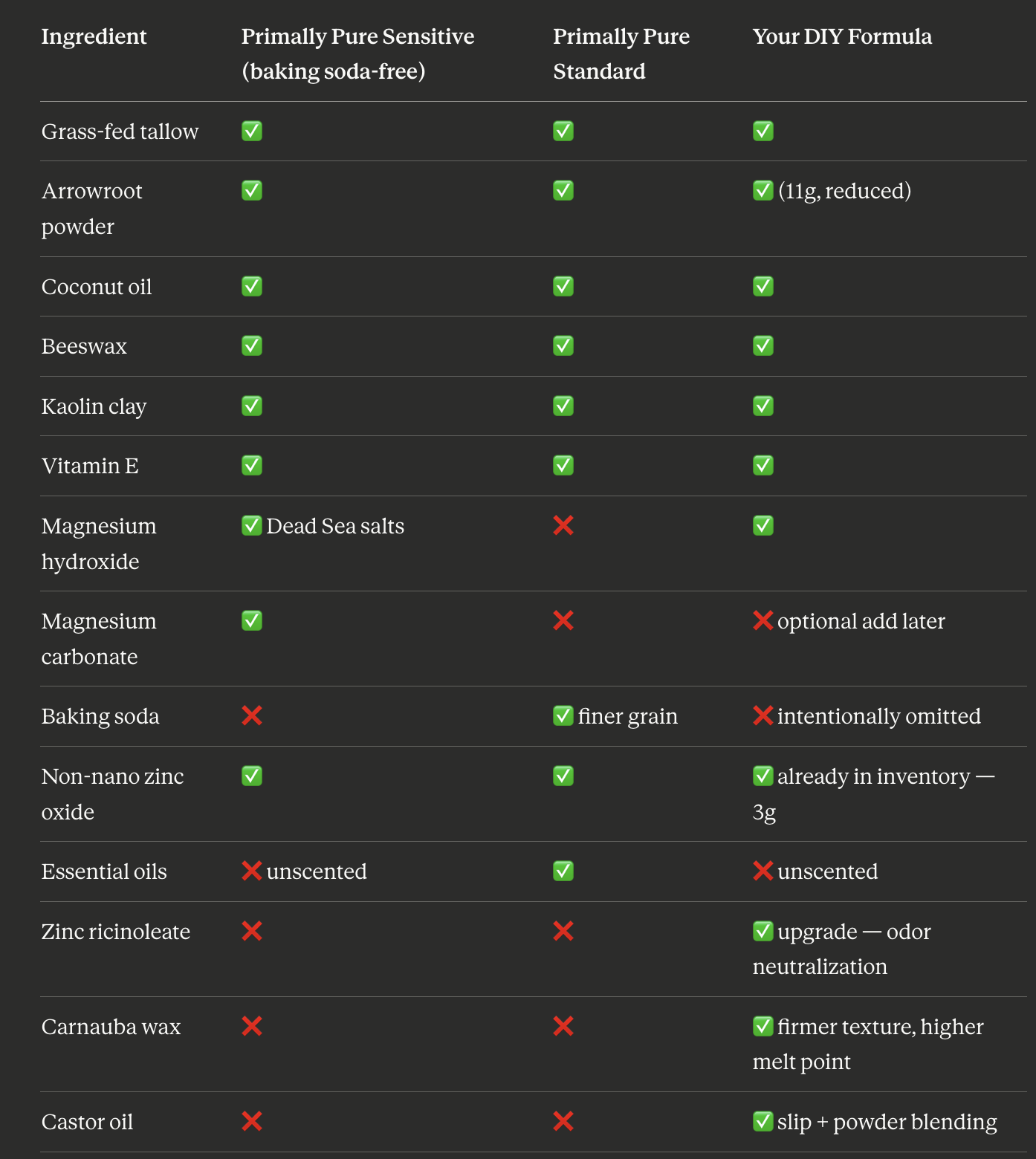
Try the clay detox first for 5–7 days — it genuinely helps and aligns perfectly with everything you already do and believe. Then test the Primally Pure baking soda-free formula as written including their zinc oxide before committing to removing it from your DIY formula. If you don't break out under your arms with it — which is likely given the different skin environment — you could simplify your formula slightly by keeping zinc oxide at a low percentage (3–5%) which adds real antimicrobial benefit without the magnesium carbonate complexity.
If you do react, your DIY formula without zinc is ready to go.
Updated detox protocol:
DayAction1–7Bentonite clay + ACV paste on underarms daily, 10–15 min7+Switch to natural deodorant7–14Expect adjustment — sweat more, possibly more odor temporarily14–21Body normalizes, natural deodorant begins working optimally
The clay detox is genuinely one of the most useful and underrated transitions tools and completely consistent with your philosophy — same ingredient, same mechanism, different location on the body.
Armpit detox with clay is genuinely useful:
This is actually a well-established transition practice when switching from conventional antiperspirant to natural deodorant. The aluminum salts from conventional antiperspirant physically plug sweat ducts and build up in the tissue over time. Clay — particularly bentonite — draws out that buildup magnetically the same way it draws sebum from your facial pores.
Simple armpit detox mask: Mix bentonite clay with enough apple cider vinegar (or water if skin is sensitive) to make a paste. Apply to clean underarms, leave 5–15 minutes, rinse. Do this daily for 3–7 days before switching to natural deodorant. It shortens the transition period significantly — some people go from 4 weeks of adjustment down to 1 week with consistent pre-detox.
The ACV is worth using over plain water here because its acidity helps break up alkaline aluminum deposits specifically. But if your underarm skin is sensitive, water works too — just slower.
Arrowroot powder 14g —-> 11g
Non-nano zinc oxide
Essential oils in deodorant are doing two jobs: scent and antimicrobial action. Since your formula already has strong antimicrobial coverage from magnesium hydroxide, zinc oxide, zinc ricinoleate, and coconut oil, you don't need essential oils for function. They'd only be adding scent.
If you ever wanted to add one for function not scent:
These are the ones with genuine antimicrobial evidence relevant to underarm bacteria specifically:
Tea tree (melaleuca) — strongest evidence, directly kills odor-causing bacteria, well studied. The downside is it has a distinct medicinal smell that many people either love or hate. At 0.5–1% the smell is subtle but present.
Lemongrass — what Primally Pure uses, genuinely antimicrobial against several odor-causing bacteria, pleasant light citrus scent. At 0.5% it's subtle.
Eucalyptus — their charcoal formula uses this, antimicrobial and cooling sensation on skin, stronger scent than lemongrass.
Clary sage — less well known but specifically studied against the bacteria most responsible for underarm odor, more subtle scent than tea tree or eucalyptus.
Scent free is a personal choice. If you did want a scent, a very subtle lemongrass or clary sage at 0.5% would give that freshness smell that most people are used to.
Containers:
For a 100g test batch you have a few practical options depending on what you already have or can easily get:
Best option — deodorant tubes: Standard 2oz (60ml) push-up deodorant tubes are the most practical for testing because they replicate exactly how you'd use and apply the final product. A 100g batch fills approximately 3–4 tubes. Available on Amazon, SKS Bottle, or Bulk Apothecary. Look for the round push-up style not the twist-up — easier to fill and less likely to crack with a firmer tallow formula.
Second option — small tins: 2oz round tins work well for a test batch and are even easier to fill — just pour directly in. Application is with fingers rather than swiping which some people actually prefer for natural deodorant. You likely already have tins from your other product lines.
Third option — whatever you have: Honestly for a personal test batch before committing to proper packaging, even a small mason jar works. Application by finger, slightly messier, but tells you everything you need to know about whether the formula works before investing in proper tubes.
What to avoid: Cardboard push-up tubes — tallow will eventually soften and seep through cardboard, especially in Danville summers. Stick to plastic or metal for anything with tallow.
Practical tip for filling tubes: Pour at 130–135°F into tubes standing upright in a small cup or muffin tin to hold them steady. Fill slightly overfull, let settle, top off once. Cap immediately after fully cooled. Don't refrigerate — cool at room temperature or the texture gets grainy.
Given you're testing, tins are probably your easiest path if you have them already on hand.