Something Worth Fighting For
On raising kids who break the right things
A girl I love is turning thirteen this year, and it sent me back to my own thirteen — the year Thirteen came out, the Catherine Hardwicke film with Evan Rachel Wood and Nikki Reed, written in six days, half of it pulled from Reed's own life. I watched it then as a peer. I watch it now as a mother. And what struck me this time was not the drugs or the shoplifting or the self-harm. It was the engine underneath all of it: a girl who needed, with her whole body, to belong to something — and the only doorway offered to her required her to burn down who she was to walk through it.
That is the part worth sitting with. The pull toward belonging is not the malfunction. The malfunction is a culture that hands a thirteen-year-old only one shape to break into, and makes the price of admission self-destruction.
Because here is the thing every parent eventually learns: the pushing is not optional. Around thirteen, the world starts asking a child who they are, and they start asking whether the world they were handed is one they actually want. They push against rules, stories, clothes, food, religion, manners, every inherited assumption. We tend to call that rebellion and treat it as something to manage.
But what if the deeper truth is that teenagers are hungry for a mold to break because they are hungry for a life that feels real?
Then the answer is not to prevent the fight. It is to give them something worthy to fight for.
Not a cause handed down as a lecture. Not a curated, wholesome personality. Something more physical than that — something they can taste, carry, plant, sell, cook, repair, and give away.
Naming the Problem
The problem is not that teens want independence. They should. They are supposed to.
The problem is that modern culture mostly offers them shallow forms of it: buy this, post this, reject this, perform this. Be different in exactly the same way everyone else is being different. The algorithm has simply industrialized the dynamic Thirteen dramatized — it gamifies social status and sells belonging back to children at the cost of their attention, their bodies, and their sense of what is real.
A more grounded independence is possible. A child can become their own person by learning real skills, joining real communities, and watching real consequences unfold. They can discover that beauty is not only aesthetic. It can be ecological. It can be useful. It can feed someone.
So the goal is not to make our children "earthy" or "wholesome" as a brand. That is just another performance. The goal is to let them taste a wider world of meaning — early, often, and joyfully — so that when the breaking comes, they have somewhere real to break toward.
Making It Our Own
A facilitator at a talk I gave recently asked the question twice, which is how I knew it was the real one: How do we make it our own? How do we actually live it, with our kids?
Mine are small — three and five — so we are not doing all of this. We are doing one thing at a time. And I have come to believe that is the whole method. Not intensity. Repetition. A practice you can repeat beats a peak experience you cannot.
The work also changes shape as they grow, which is part of its beauty:
A three-year-old can water the herbs and squish mud and do a blind berry taste test at the kitchen table.
A five-year-old can have their own kid-safe knife, their own row in the garden, and a real job at the booth.
A tween can help sell, label the jars, count the change.
A thirteen-year-old can plan the booth — price the goods, explain the materials, donate a portion, mentor a younger child, interview the farmer.
A teenager can travel with questions: Who grew this? Who owns the land? Who is missing from this celebration? What is beautiful here? What is hard? What would I change?
That last one — traveling with questions — is the version of rebellion I want to nurture. Not rejection for its own sake. Devotion to a better way of living.
A simple yearly rhythm is enough to start:
One seasonal class.
One farm volunteer or garden work day.
One harvest festival.
One thing the child makes, grows, sells, gives, or teaches.
The point of selling something nature-made, pretty, cheap, and sustainable — seed packets, pressed-flower cards, dried citrus garlands, lavender bundles, beeswax wraps, herbal bath sachets — is not the few dollars. It is that the child is not decoration at the booth. They are part of the exchange. That is a different kind of confidence than a screen can manufacture.
Local: Start Where You Already Are
For us in the Bay Area, the Sonoma and Mendocino corridor is the easiest place to begin.
The California School of Herbal Studies in Forestville was founded in 1978 by Rosemary Gladstar — the godmother of modern American herbalism — and is run today by director Rebecca Maxfield. It is the oldest herb school in the country. Alongside the professional programs, they offer family and community herbalism workshops, one-day and weekend classes, and free volunteer days at their new farm down the road, where you literally prep beds and get your hands in the dirt. They ran a children's session one summer before COVID; that is exactly the kind of offering that resurfaces, so the mailing list is worth joining now rather than later.
Wildflowers Nature School in Sebastopol has long run nature programming for kids, including a junior-mentor track for older children built around earth skills and mentoring the little ones. Slide Ranch in Marin runs family farm days with goat-milking demonstrations and hands-on time with farm animals — an easy first outing for a three- and five-year-old.
The Sonoma Ecology Center at Sonoma Garden Park, just outside downtown Sonoma, runs a weekly Saturday Harvest Market from late March through December (produce, flowers, eggs, honey, and olive oil from their own 6.1-acre garden and local neighbors), Friday native-plant sales, and an annual fall Harvest Festival — free, family-centered, with apple pressing, a giant straw-bale fort for kids, field games run by their education staff, and a pie contest. They post the festival date on their site each year and send it through their newsletter.
And the anchor of the local calendar: the Hoes Down Harvest Festival at Full Belly Farm in the Capay Valley, set for Saturday, October 3, 2026 in Guinda. It is entirely volunteer-powered — the whole festival is run by people who show up — and its children's area has been called the best in the state. Kids milk cows, felt wool, and grind corn. Tickets open through EcoFarm on August 1, and there is a separate Open Farm Day in the valley the next day, Sunday the 4th. This is the kind of trip that becomes a family rite of passage: not "we went somewhere," but "we learned how something is made."
West Coast: Worth the Drive
For a slightly bigger regional trip, Oregon Ag Fest in Salem is built precisely around helping families understand where food, fiber, and flowers come from. It is a spring event — April 25–26, 2026 at the Oregon State Fairgrounds — with kids 15 and under free and nearly every activity free of charge: pony rides, chicks hatching, seed planting, sheep shearing. For little ones, it is pure sensory delight; for older kids, it quietly makes the case that agriculture is real work done by real people.
East Coast: Where Autumn Does the Teaching
On the East Coast, fall makes this almost effortless.
The National Apple Harvest Festival in Biglerville, Pennsylvania — the heart of Adams County apple country — runs the first two full weekends of October, October 3–4 and 10–11, 2026, at South Mountain Fairgrounds. Orchard tours, hayrides, a visit from Johnny Appleseed, and 300-plus juried crafts. Applecrest Farm Orchards in New Hampshire treats its harvest festivals as a decades-long tradition explicitly about reconnecting families with the land, with free admission and parking.
For a coastal version of the same lesson, look at Nantucket's cranberry-bog events. The original Cranberry Festival changed as commercial production declined, and the Nantucket Conservation Foundation reshaped it into newer fall gatherings — hayrides, kids' games, music at the bog. That shift is itself the lesson: traditions are living things. They change when the land changes. A child who learns that early holds their own inherited traditions more thoughtfully.
International: A Someday List
For the later years, I keep a family "someday list" of trips that are not vacations so much as seasonal pilgrimages.
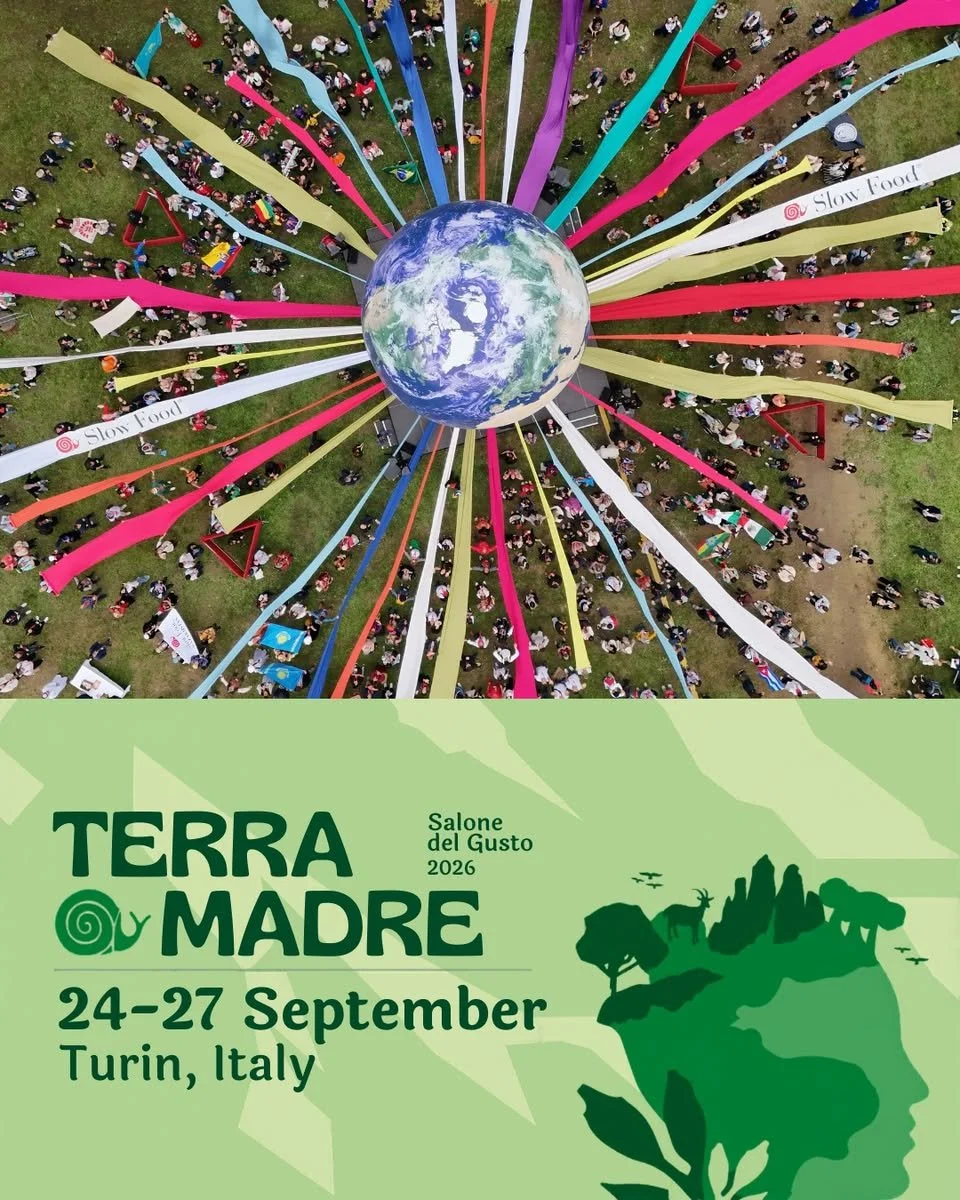
Terra Madre Salone del Gusto in Turin is Slow Food's great international gathering — food politics, sustainable agriculture, a marketplace, shared meals with producers from around the world. The 2026 edition runs September 24–27, a milestone year marking the 40th anniversary of Slow Food Italy. For an older teen, it is a chance to see food as culture, ecology, labor, and justice all at once.
In Umbria, olive-harvest season offers something quieter and just as formative. Frantoi Aperti — "open mills" — spreads across five weekends, October 17 to November 15, 2026, in its 29th edition. Working mills throw open their doors mid-press: you watch the olives unloaded and crushed, talk to the millers, and taste the first oil of the year on warm bread, with concerts and family activities woven through the hill towns. A family olive harvest teaches patience, handwork, bitterness, and the difference between food as commodity and food as inheritance.
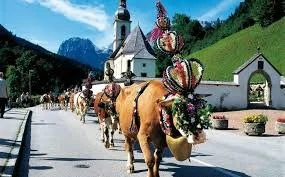
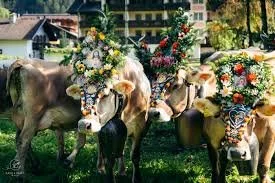
In the Alps, the autumn cow descents — Alpabzug in Switzerland, Désalpe in the French-speaking cantons, Almabtrieb in Austria and Bavaria — bring decorated cattle down from the high summer pastures with bells, flowers, markets, and regional food. For a child who has only ever seen animals as products, watching a whole village turn out to honor a herd's safe return is a different education entirely.
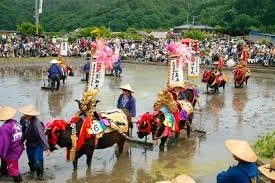
And in Japan, rice-centered seasonal rituals — preparing the paddies, planting, harvesting, drying the sheaves — reenact each stage of cultivation as an act of gratitude. Another lens, the same truth: the calendar can be tied to the earth rather than to the next thing to buy.
What This Is Really For
We don't make this our own by copying someone else's farm life, or pretending our children are growing up in a village when they are not, or romanticizing labor from a comfortable distance. We make it our own by choosing practices we can actually repeat, at the scale of the life we actually have.
A small child waters herbs. An older child labels jars. A tween sells at the booth. A thirteen-year-old plans it. A teenager travels with questions and starts deciding what the fight becomes.
Give them seasons. Give them skills. Give them elders. Give them real work. Give them beauty that is not disposable. Give them something worth fighting for — and then, as they grow, let them help decide what that fight becomes.
That is the rebellion I am raising my children toward. Not breaking away from everything. Breaking toward something true.
Resource Summary, CA
California School of Herbal Studies - classes and volunteer opportunities
Wildflowers Nature Based Youth Programs & Camps
Sonoma Ecology Center at Sonoma Garden Park, volunteer days and markets
public garden, 19996 7th St E, Sonoma, CA, 95476
2026 Harvest Markets run from late March through until December, every Saturday, 9:00 am-1:00 pm
The park’s newest feature includes a Children’s Play Area
An annual fall Harvest Festival — free, family-centered, with apple pressing, a giant straw-bale fort for kids, field games run by their education staff, and a pie contest.
Ruth Bancroft Garden Events and Book Readings
Sienna Ranch Farm School for Kids in Lafayette
Calendar
April
Oregon Ag Fest, April 25-26
September
Terra Madre Salone del Gusto in Turin, Italy, Slow Food
Sept 26, fall descent of decorated alpine cows, Switzerland, Alpabzug
October
Hoes Down Harvest Fest, October 4th, Guinda, CA (1.5 hours north of Danville)