Skip the synthetic dye tablets this year. With a few pantry staples — beet powder, turmeric, onion skins, purple cabbage, and blue spirulina — you can create a full rainbow of naturally dyed eggs that are beautiful, non-toxic, and genuinely fun to make with kids.
Before You Begin
Best to start the night before, so the eggs can soak overnight in color if needed
Hard boil your eggs first, then let them cool completely before dyeing.
Each dye bath makes enough for 2 eggs. Scale up if needed.
Use tall narrow mugs or mason jars — eggs need to be fully submerged.
Strain the turmeric bath through a coffee filter or fine mesh strainer before adding eggs, to avoid blotchy color.
For spirulina: use warm tap water only — no kettle needed. Heat destroys the pigment.
Vinegar goes into the bath before the eggs, not after. It helps color bond to the shell.
Wear gloves for turmeric — it stains everything.
White eggs give the truest, most vibrant color results. Brown eggs add a warm base that muddies colors, especially greens and blues.
Step-by-Step Instructions
Make the Dye Baths
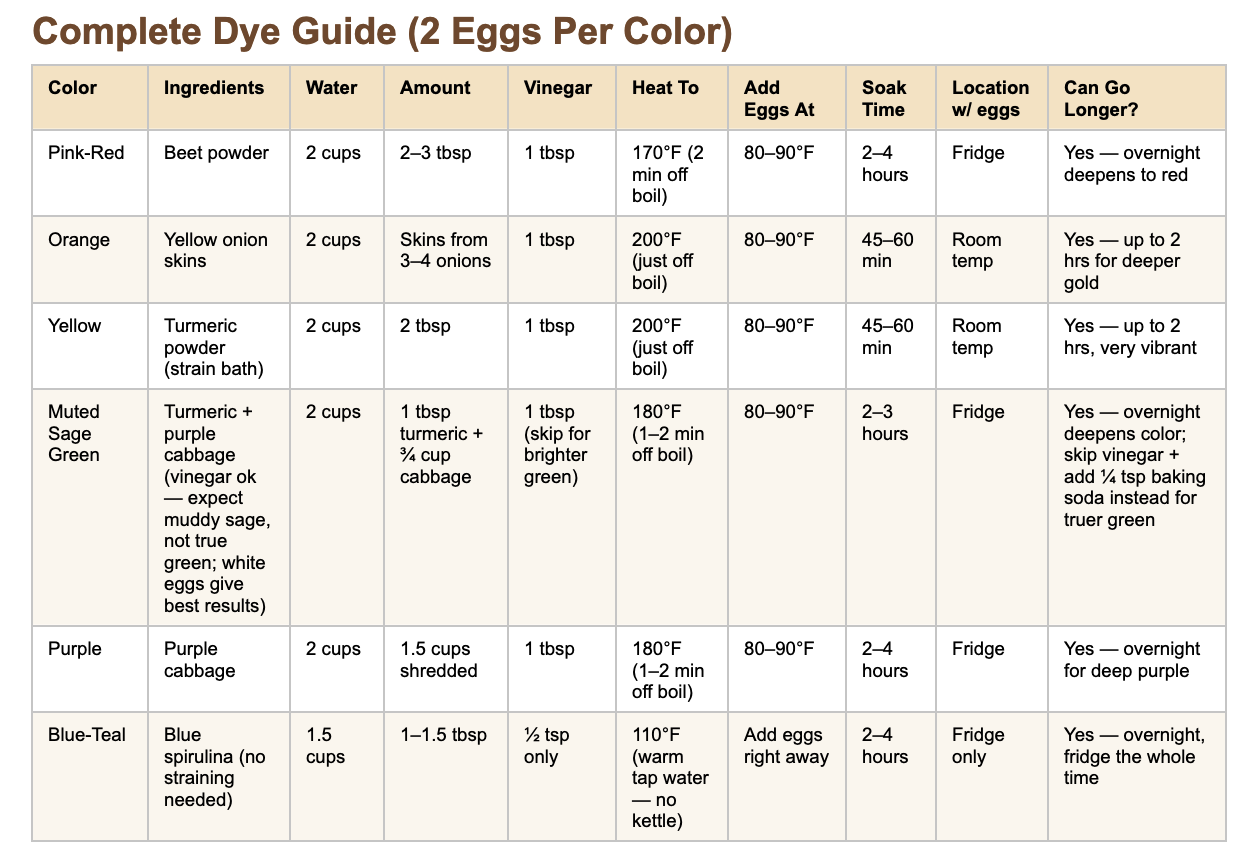
Heat your water to the temperature listed in the table above.
Remove from heat and whisk or stir in your dye ingredient.
Add vinegar while the bath is still warm (around 140–150°F) — this helps it incorporate evenly. Exceptions:
blue spirulina gets only ½ tsp vinegar, stirred in with warm tap water.
Green: Skip the vinegar completely and just use baking soda- you will see the purple cabbage water turn green!
Let the bath cool to 80–90°F before adding eggs. For spirulina, water starts at ~110°F so eggs can go in right away.
Strain the turmeric bath through a coffee filter before cooling.
Soak the Eggs
Place hard-boiled, cooled eggs into the dye bath. They should be fully submerged.
Onion skin and turmeric baths can sit at room temperature — they only need 45–60 minutes.
All other baths go in the fridge. Move them once the bath is at room temperature.
Longer soaking = deeper color. Overnight in the fridge works beautifully for beet, cabbage, and spirulina.
Finishing
Remove eggs with a spoon and set on a drying rack or paper towel.
Let dry completely — they smudge if set down wet.
Optional: rub a tiny amount of olive oil or coconut oil on the dried shell for a beautiful subtle sheen.
Bonus: Combination Colors
With these ingredients you can mix baths for even more color variety:
Sage Green: 1 tbsp turmeric + ¾ cup purple cabbage in the same bath
Rust Orange-Red: 2 tbsp beet powder + skins of 3 onions in the same bath
Cool Blue-Gray: ½ cup purple cabbage + 1 tbsp blue spirulina combined
Temperature Quick Reference (No Thermometer)
200°F / Just off boil: Aggressively steaming, poured immediately — for turmeric and onion skins
180°F / 1–2 min off boil: Steam slowing noticeably — for purple cabbage baths
170°F / 2 min off boil: Steam present but gentle — for beet powder
110°F / Warm tap water: Comfortable to hold your hand under — for blue spirulina only, no kettle needed
80–90°F / Cool to touch: Barely warm, comfortable to hold — when to add eggs to all baths except spirulina