
Which way, western child
Your School Probably Has a Wellness Policy. Is Anyone Actually Following It?
What I learned about school nutrition, parent involvement, and the challenges of turning existing policies into everyday practices.
I recently discovered that my child's public school district has a wellness policy that addresses nutrition education, classroom celebrations, fundraising, food rewards, and parent involvement. I was genuinely excited to find it because it described many of the things I had already been asking about at our school.
What surprised me was how difficult it became to find anyone who could explain how the policy was being implemented or who was responsible for making sure it was followed.
What started as a few questions about donuts, candy, artificial food dyes, and classroom celebrations eventually led me to spend months researching federal requirements, reviewing district policies, contacting state education specialists, attending PTA meetings, and filing a formal complaint requesting an investigation and corrective action.
Along the way, I learned that there are already an extraordinary number of resources available to schools. The federal government, the Centers for Disease Control and Prevention (CDC), state education departments, and even the National PTA provide training, questionnaires, checklists, and examples of schools that have successfully implemented wellness initiatives.
Many districts have established clear expectations for school celebrations, provided parents with approved snack lists, and created opportunities for volunteers to participate in health and nutrition education.
I began wondering why something that already has so much guidance and support could be so difficult to discuss at my own school. I also wondered how many other parents might be encountering the same resistance without realizing that their district already has a policy intended to address these concerns.
1. Your school probably already has a wellness policy.
Every U.S. school district participating in the National School Lunch Program or School Breakfast Program is required to develop and implement a Local School Wellness Policy. These policies address much more than the food served in the cafeteria.
Federal requirements include nutrition education and promotion, physical activity, standards for foods sold to students during the school day, restrictions on certain food marketing, parent and community involvement, and regular assessments of how the policy is working. Districts must also identify officials responsible for implementation and communicate information about the policy to the public.
Districts have flexibility to adopt additional standards for classroom celebrations, food rewards, fundraising, and foods provided by parents or volunteers. The rules that apply to foods sold during the school day are not necessarily the same as those governing donated foods or activities outside school hours, which makes it important to understand both federal requirements and the district's own policy.
In California, many school districts have adopted a Student Wellness Policy known as BP 5030.
I would encourage parents to search their district's website for "Student Wellness Policy" or "Local School Wellness Policy" and read through it. You might discover, as I did, that your district has already made commitments that aren't necessarily being communicated or practiced at individual schools.
2. What children experience outside the cafeteria matters too.
One thing I want to make clear is that I have been very impressed with the improvements made to our district's school lunch program. I appreciate the work involved in preparing nutritious meals for so many children, and I think those efforts deserve recognition.
My concerns developed around everything happening outside the cafeteria.
Over time, I encountered classroom donut parties, desserts used as behavioral rewards, morning celebrations centered around sweets, and school-sponsored activities requesting hundreds of individual candies from parents. Some of these products contained synthetic food dyes, including colors addressed by recent California food legislation.
What stood out to me was that there rarely seemed to be any guidance encouraging parents to consider nutritional quality when donating food to share with other children. I didn't see approved snack lists, examples of healthier celebrations, or even a simple reminder that the district had a wellness policy.
When I began asking whether healthier alternatives could be considered, I received different responses. Sometimes the concern was treated as a personal preference, while other times I was told that any guidance would have to come from someone higher up.
This eventually led me to a question that seemed like it should have a straightforward answer: Who is actually responsible for implementing the wellness policy?
I think an important distinction gets lost in these conversations. I am not interested in telling parents what they should feed their own children. Families have different preferences, traditions, financial circumstances, and nutritional needs.
However, when a PTA or school organization purchases and distributes food to hundreds of children, that organization is already making a nutritional decision on behalf of other families. It seems reasonable that these decisions should be informed by the wellness policy the district has adopted.
I don't think healthier school celebrations have to mean eliminating desserts or making food a source of shame. There are many ways to celebrate children through activities, games, art projects, outdoor time, and foods that support the nutritional lessons they are learning.
I would simply like to see schools encourage those possibilities and help parents understand the expectations before asking them to donate food.
3. What happens when nobody knows who is responsible?
As I researched our district's wellness policy, I found that its previous assessment had identified an issue with naming the person responsible for ensuring implementation.
This concerned me because federal wellness-policy requirements specifically call for districts to identify one or more officials responsible for making sure individual schools comply with the policy.
Districts must also assess implementation at least once every three years and make those assessments available to the public. These reviews are supposed to help districts understand not only whether their policies are adequately written, but whether schools are actually putting them into practice.
I started asking who currently held the implementation role, how schools were receiving guidance, and what had happened with the recommendations from the previous assessment.
I was surprised by how difficult it was to get clear answers.
If an assessment identifies weaknesses in nutrition education, fundraising practices, staff responsibilities, or community involvement, I would expect there to be some process for reviewing those findings and deciding what improvements should follow.
I would also expect someone at the district level to help principals, teachers, and parent organizations understand how the policy applies to their activities.
Without that structure, it seems entirely possible for a district to have a thoughtful wellness policy while individual schools continue operating as though it doesn't exist.
I don't think parents should have to become experts in federal nutrition regulations just to find out who is responsible for answering their questions.
4. I offered to help through our PTA, but the proposal was declined.
One of the most frustrating parts of this experience involved trying to participate through our Parent Teacher Association.
I am a paying PTA member, and I made an effort to understand how the organization works. I attended meetings, reviewed the district's wellness policy, researched other schools' programs, contacted education specialists, and eventually presented a formal request to establish a Health & Wellness representative or committee within our PTA.
I wasn't asking anyone to regulate families' personal food choices or eliminate school celebrations. I offered to volunteer my time to help share nutrition education resources, encourage healthier school activities, and connect our school with wellness initiatives that already exist elsewhere.
I had also discovered that the National PTA specifically encourages local PTAs to participate in developing, implementing, and evaluating school wellness policies. Its recommendations include forming or participating in wellness committees and School Health Advisory Boards.
The CDC and USDA also emphasize the importance of involving parents and community members in developing and implementing school wellness policies.
I found other schools in our region that already have PTA Health & Wellness representatives or committees working on nutrition education, healthy celebrations, gardens, fundraising, and related initiatives.
Given all of that, I thought the proposal would be a fairly straightforward way to offer some help.
Our PTA ultimately voted against establishing the role.
I recognize that a PTA has the right to decide which committees or positions it wants to create. Federal wellness requirements do not automatically require a local PTA to establish a specific wellness position, and I don't expect every idea I present to be approved.
What frustrated me more than the decision itself was that I didn't have an opportunity for meaningful discussion with the broader membership, didn't receive an explanation of the decision, and wasn't offered another way to support the same goals. I eventually followed up myself to find out what had happened.
It was particularly discouraging because I wasn't asking the organization to take on a major new responsibility without help. I was offering to do some of the work myself.
Why does nutrition education become such a difficult conversation?
I have found it strange how quickly conversations about school nutrition can become contentious.
When I ask whether the food purchased and distributed by a school organization should reflect its district's wellness policy, the conversation sometimes shifts to whether parents should be allowed to choose what their own children eat.
Those are two different questions.
I have no interest in telling another family what to pack in a lunchbox. I am asking whether organizations purchasing or distributing food to other people's children should consider the nutritional guidance their schools already have.
Somehow, even offering to help with that conversation can feel like taking a political position.
I think that is a cultural problem worth examining.
PTAs have tremendous potential to improve children's experiences. They raise money, organize events, build community, support teachers, and create opportunities that might not otherwise exist.
They can also help promote nutrition education, organize healthier celebrations, support school gardens, and introduce families to useful resources.
However, if a school organization regularly purchases and distributes sugary treats while resisting opportunities to discuss alternatives, its activities may work against the wellness goals the district has adopted.
I don't believe the people making those decisions are intentionally trying to harm children. Most volunteers care deeply about their school communities and give enormous amounts of their own time.
Still, good intentions don't necessarily mean every established tradition or practice is beneficial. If we can reconsider how schools approach technology, safety, bullying, and academic instruction, I don't see why nutritional practices should be exempt from discussion.
It is disappointing when parents who want to contribute to health education cannot find an avenue to do so, particularly when federal agencies and national parent organizations are already encouraging exactly this kind of involvement.
The PTA does not have to create a wellness chair, but the district still has an independent responsibility to provide opportunities for parent and community participation in its wellness-policy process.
If the PTA isn't interested in leading a particular initiative, perhaps the school, district, or another parent group could provide an alternative.
I would much rather see a conversation about how something could work than simply have the idea end with a vote.
5. Parent involvement should mean more than fundraising and volunteering.
As I continued trying to understand how to participate in school decisions, I noticed that my frustrations extended beyond nutrition.
Meeting schedules were not always easy to find, some meetings were held exclusively during work hours, and remote participation was occasionally advertised without reliable access or complete instructions.
I also found it difficult to understand the PTA election process, how members could learn about candidates, and when they had opportunities to participate in decisions.
At one point, I learned that candidate information had been posted on a bulletin board near the school office. Until then, I hadn't known to look there or understood that an election was taking place.
I recognize that schools and PTAs have procedures for announcements, elections, and meetings. A particular communication method may even satisfy the organization's bylaws. But I think it is worth considering whether those methods actually help parents participate.
Many families work during the day and rarely enter the school office. Others have young children, demanding schedules, or difficulty attending a meeting without childcare.
If a paying PTA member doesn't know when elections are happening, who is running, or how to participate, something about the communication process deserves review.
What concerns me most is that a new parent may have to know the right people before they can figure out how to contribute.
I've heard similar frustrations from other parents who described meetings as unwelcoming or difficult to participate in. These are individual experiences, and I can't speak for every family, but they made me wonder how many parents simply stop trying.
I would love to see parent organizations provide clearer information about meetings, voting, volunteer opportunities, and how to submit ideas. It would also be helpful to have a process for acknowledging concerns and communicating decisions afterward.
These issues affect more than wellness.
Families have legitimate questions about after-school care, crossing guards, student safety, school gardens, and other programs that directly affect their daily lives.
For example, parents struggling with long after-school care waiting lists may have ideas about alternative providers, shared facilities, transportation, or additional programs. There may be real licensing, staffing, space, or funding limitations, but families should have somewhere to raise those needs and understand what options have been considered.
I don't expect schools or PTAs to solve every problem parents bring forward. I do think they should have a reasonably accessible way to hear those concerns.
Parent involvement should not mean only helping carry out decisions that have already been made. It should also include opportunities to identify needs, suggest improvements, and participate in conversations about what might be possible.
6. A Seattle superintendent's message made me think about school culture.
While researching these issues, I came across an October 25, 2026 newsletter from Seattle Public Schools Superintendent Ben Shuldiner.
He was addressing challenges within Seattle's school system, including leadership decisions, communication, and the importance of involving school communities in major changes.
What interested me was his willingness to acknowledge that institutional processes can become barriers for the very people who want to support public schools.
His comments were not specifically about nutrition or PTA wellness committees, and Seattle's circumstances are different from my own. Still, I found the broader message relevant.
When someone offers to volunteer, raises a concern, or suggests an improvement, how does the organization respond?
Does it invite a conversation and explain what is possible, or does it rely on existing procedures to close the discussion?
There are certainly reasons that schools cannot accommodate every request. Staff have limited time, organizations have budgets and bylaws, and some proposals may not be practical.
But I think leadership should be willing to explain those limitations and consider alternatives.
The Seattle superintendent's discussion of communication and community engagement reminded me that an organization's culture has a great deal to do with whether parents feel welcome.
A school doesn't have to agree with every parent to create an environment where people feel heard.
I would love to see more school leaders openly discuss what isn't working and invite families to help improve it, particularly when parents are offering their time and resources rather than simply requesting additional services.
7. Other schools are already showing what is possible.
One of the most encouraging parts of my research has been discovering school districts that have already developed practical ways to communicate wellness expectations.
I think these examples are valuable because they show that nutrition education and healthier school celebrations don't have to be complicated or controversial.
Some districts have adopted stronger standards than the federal minimum, while others have focused on making information accessible to parents and volunteers.
Manteca Unified School District, California
Manteca Unified has published wellness guidance addressing specified synthetic food dyes in foods served, sold, or provided during the school day, including foods brought by parents for shared classroom celebrations and other school activities.
The district distinguishes between food families provide for their own children and food distributed to other students.
I appreciate that distinction because it recognizes the importance of personal family choices while establishing expectations for food shared with other people's children.
The district also provides ingredient-label guidance, Smart Snacks resources, and a nutrition department contact for questions.
Manteca Unified Student Wellness Policy:
https://www.mantecausd.net/students/student-wellness/wellness-policy
Stella Brockman Elementary School, California
Stella Brockman Elementary, within Manteca Unified, has published a parent bulletin explaining expectations for food brought to school celebrations.
Its guidance addresses original packaging, visible ingredient and nutrition labels, food allergies, and specified synthetic dyes.
I especially like this example because parents are being given information before they purchase or donate food.
It seems much more practical to provide clear guidance to everyone than to leave individual teachers and parents to interpret the rules on their own.
Stella Brockman Elementary School Bulletin:
https://stellabrockman.mantecausd.net/our-school/school-bulletin
Sacramento City Unified School District, California
Sacramento City Unified maintains a public wellness committee resource page with approved snacks, healthier celebration ideas, Smart Snacks information, and answers to common questions about food at school.
Its resources address birthday celebrations, fundraisers, booster organizations, homemade foods, and other situations parents encounter.
The district also suggests nonfood celebrations, including games, art projects, outdoor activities, and classroom experiences.
I think this is a particularly useful example because the district provides practical answers rather than expecting every volunteer to become an expert in nutrition regulations.
Sacramento City Unified District Wellness Committee:
https://www.scusd.edu/connect/district-committees/district-wellness-committee
Palmdale School District, California
Palmdale has shared guidance encouraging families and volunteers to provide healthier foods for classroom parties, birthdays, and school celebrations.
Its materials include practical expectations and alternatives to common sugary treats.
What I appreciate about this approach is that the message comes from the district rather than placing individual parents in the uncomfortable position of asking others to change their contributions.
Palmdale School District:
https://www.palmdalesd.org/
Moreland School District, California
Moreland has published wellness guidance addressing classroom celebrations, Smart Snacks standards, and scheduling food-based celebrations after lunch.
Its approach connects school events with the broader nutritional environment children experience throughout the day.
I think this reflects an important point about education. Children learn not only from lessons but also from the everyday practices adults model around them.
Moreland School District Wellness Guidance:
https://www.moreland.org/apps/pages/index.jsp?pREC_ID=1252956&type=d&uREC_ID=911333
Robla School District, California
Robla has published school wellness resources addressing classroom celebrations, food rewards, fundraising, and school-connected activities.
These materials demonstrate how districts can communicate expectations across the various groups involved in school events, rather than limiting nutrition discussions to cafeteria operations.
Robla School District:
https://www.robla.k12.ca.us/
Salt Lake City School District, Utah
Salt Lake City School District provides a particularly interesting example of communicating food-additive laws directly to families.
The district published an explanation of Utah's restrictions for the 2026–27 school year, identifying the affected ingredients, describing exceptions, and explaining what parents can continue providing for their own children.
I appreciate how straightforward the communication is. Families don't have to independently research the legislation to understand the school's expectations.
Salt Lake City School District — New Food Law:
https://www.slcschools.org/new-food-law
These districts operate under different state laws and local policies, and I don't assume that every practice described in their written materials is implemented perfectly at every campus. However, their publicly available resources give other schools a place to start.
I would be interested in contacting some of these districts to learn more about how they introduced their programs, how parents responded, and what challenges they encountered.
8. California's changing food-dye laws create an opportunity for education.
California has adopted two important pieces of legislation addressing food additives.
Beginning January 1, 2027, AB 418 prohibits the manufacture, sale, or provision of food products containing Red Dye No. 3, brominated vegetable oil, potassium bromate, or propylparaben.
Additional restrictions under AB 2316 take effect December 31, 2027, addressing Blue 1, Blue 2, Green 3, Red 40, Yellow 5, and Yellow 6 in specified public school meals and competitive foods.
These laws do not have identical scopes, and the six-dye school restrictions do not automatically apply to every food a parent might donate for a classroom celebration.
However, districts can consider stronger local wellness expectations, as Manteca Unified has done.
I think these changes present an excellent opportunity for parent education.
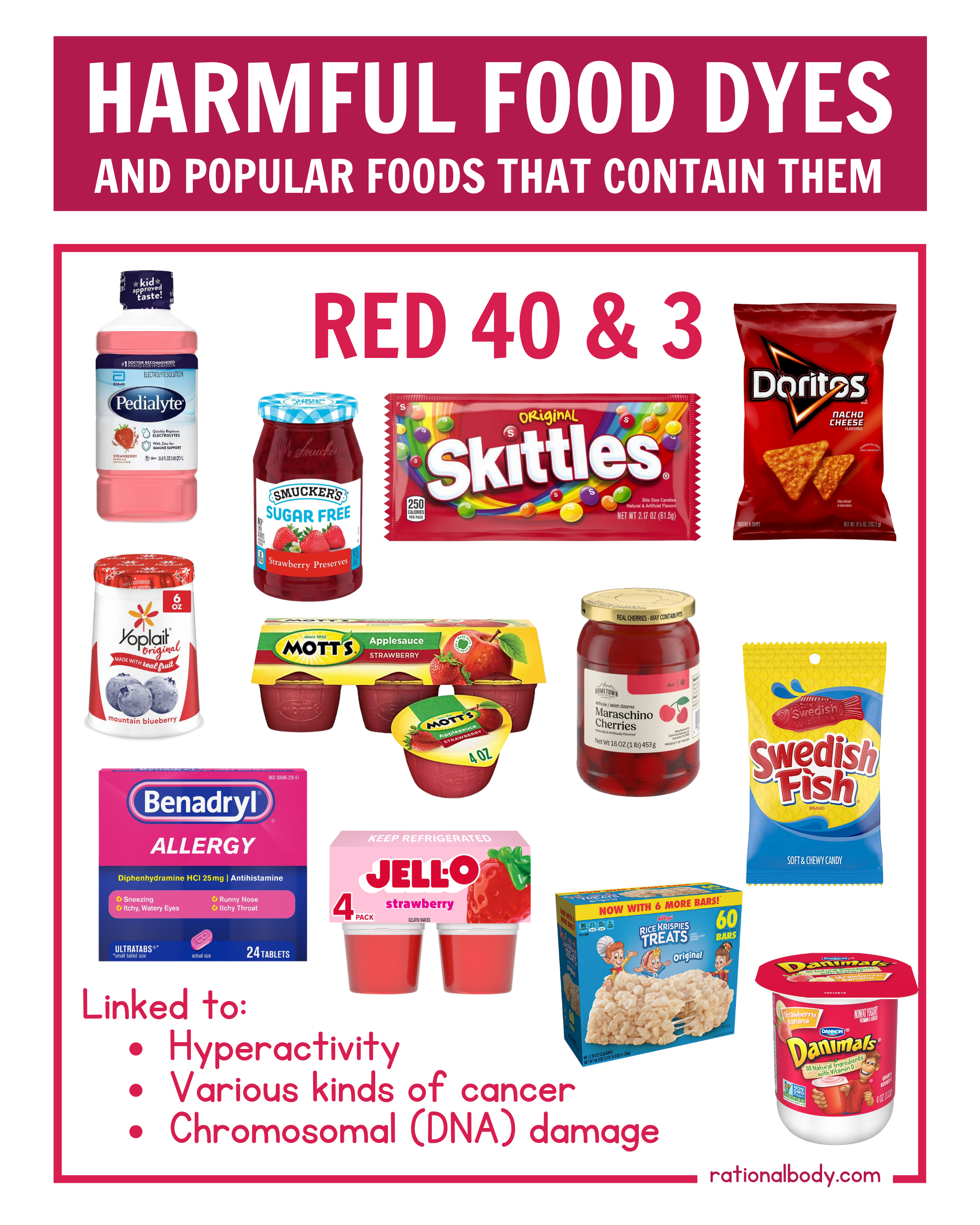
Families are regularly asked to contribute food for class parties, fundraisers, carnivals, movie nights, and other school events. Many parents probably don't know which products contain synthetic dyes or how those ingredients appear on food labels.
These colors may be found in candies, lollipops, gummies, frosting, sprinkles, packaged desserts, fruit-flavored snacks, beverages, and other grocery-store products. Ingredients vary by product and can change over time, so the package label is what matters.
I would love to see districts provide a simple illustrated guide explaining how to identify these additives, what products commonly contain them, and which alternatives are available.
Schools could include this information whenever they request donated food, along with nutrition guidance and any local celebration standards.
It would also be useful to explain which restrictions are required by law and which additional practices the district has chosen to adopt.
I don't think parents should have to independently research food-additive legislation just to figure out what is appropriate to donate to their child's classroom.
Sharing information early would make it easier for parents and volunteers to support the district's goals without confusion or conflict.
9. Utah restricted food dyes but exempted concession stands.
One of the more surprising examples I encountered came from Utah's new school food-additive legislation.
Beginning in the 2026–27 school year, Utah restricts specified additives in many foods sold, offered, donated, or served on public school grounds during the school day.
Salt Lake City School District has published a useful explanation of the law, including its exceptions.
What surprised me was discovering that vending-machine sales and concession items sold at school-sponsored events are exempt under the legislation.
This raises an obvious question for me.
If a particular additive is considered important enough to restrict when a school offers food in one setting, why would the same ingredient be permitted in food sold through a concession stand at a school-sponsored event?
The child's exposure doesn't change because the food was purchased through a different sales arrangement.
I don't know why Utah lawmakers included those exceptions. There may have been concerns about fundraising revenue, athletic events, vendor agreements, operational challenges, or other considerations. Establishing the actual reasons would require examining the legislative history rather than assuming that particular companies influenced the decision.
Still, I think the exemption deserves discussion.
School fundraisers and concession stands can generate meaningful revenue, and changing established products or suppliers may involve real costs. I understand that schools have financial constraints.
But I also think those financial considerations should be weighed openly against the nutritional goals the legislation is intended to support.
I've encountered a similar tension when discussing school wellness locally. Healthier food choices sometimes seem negotiable when they conflict with familiar fundraising activities or school traditions.
I don't think schools necessarily need to eliminate concession stands or stop fundraising through food. There may be plenty of affordable alternatives that allow schools to continue raising money while supporting healthier choices.
The Utah law illustrates how a policy can be intended to improve children's food environments while leaving exceptions that complicate the message.
Even where the law permits a particular practice, a school district can still examine whether that practice aligns with its broader wellness goals, subject to applicable law.
I would like to see more schools make those decisions thoughtfully and explain the reasoning to families.
10. There are already free training resources for parents, teachers, and PTAs.
One of the things that surprised me most during this process was the amount of educational material already available.
The USDA provides online quizzes and materials explaining school nutrition environments and wellness-policy expectations.
WellSAT offers questionnaires that help districts evaluate both their written policies and what is actually happening in schools.
The California Department of Education offers training courses covering local wellness-policy requirements and implementation. Some courses provide professional development credit to eligible staff.
National PTA provides guidance encouraging parent organizations to participate in developing and implementing school wellness policies.
The CDC also publishes a resource called Putting Local School Wellness Policies into Action: Stories from School Districts and Schools, which documents 11 examples of schools and districts translating wellness policies into everyday practices.
I found these resources genuinely useful because they explain the policies in practical terms and offer examples of what successful implementation can look like.
I would love to see school districts share a basic collection of these resources with principals, teachers, PTA leaders, and volunteers at the beginning of each year.
Even a simple email with a few links and a short explanation could help.
Districts could also include wellness information in PTA leadership orientation, volunteer materials, and requests for classroom food donations.
There is no reason every volunteer should have to independently discover the policy or figure out how it applies.
I think schools could accomplish quite a bit by making existing information easier to find and giving people a clear person to contact with questions.
11. What can parents do when they encounter resistance?
My experience eventually led me to file a formal complaint concerning several aspects of wellness-policy implementation, including unclear responsibility, nutrition guidance, assessment follow-through, staff training, and opportunities for parent participation.
The investigation was still open when I prepared this article, and the concerns I've described should not be interpreted as findings that a school district or PTA violated the law.
I would encourage other parents who encounter similar issues to begin by reading their district's wellness policy and most recent assessment.
It is helpful to understand exactly what the district has committed to doing before raising concerns about individual events or practices.
Parents can also ask who is responsible for implementation, how schools receive guidance, and whether the district has a wellness committee or another way for families to participate.
If you notice something that appears inconsistent with the policy, document the specific situation and the relevant policy language. This usually creates a more productive conversation than simply expressing frustration about unhealthy food.
I also think it helps to bring examples from schools that have already addressed similar issues.
If your school doesn't have an approved snack list, another district may have one that could serve as a starting point. If your PTA doesn't have a wellness representative, another school may be able to explain how its program works.
When a suggestion is declined, I would encourage parents to ask whether there are other opportunities to support the same goal.
If concerns remain unresolved, the district may have a formal review or complaint process. The appropriate process depends on the issue and the applicable state and local requirements.
I don't believe every disagreement needs to become a formal complaint. In my case, however, I reached a point where I could not identify a clear way to obtain answers about responsibilities that appeared to be written into the policy itself.
My hope is that the process ultimately helps clarify those responsibilities and makes it easier for other families to participate.
12. I would love to see wellness become part of everyday school culture.
Schools already invest tremendous energy into helping children succeed. Families raise money for enrichment, purchase classroom supplies, organize events, support teachers, build gardens, and volunteer in countless ways.
I think nutrition deserves to be part of that same conversation because the school environment influences children's everyday habits and experiences.
I would love to see schools introduce families to their wellness policies at the beginning of each school year, rather than leaving parents to discover them independently. PTA leaders could receive basic nutrition resources and guidance that help them plan celebrations and fundraising activities, while teachers could have clear expectations to share with families when requesting donated food.
There should also be a simple way for parents to bring forward concerns or ideas, whether that's through the PTA, a school wellness committee, or another district representative. Someone should be responsible for responding to those suggestions and helping determine what might actually be possible.
None of this seems particularly complicated, especially when so many schools have already developed these resources and programs. It seems like we could accomplish quite a bit simply by sharing what already exists and making it easier for parents who want to help to participate.
I don't expect schools to achieve perfect nutrition, eliminate every sugary treat, or agree with every suggestion parents make. I would simply like to see more consistency between what schools teach about health and the decisions they make when providing food to children.
I also hope more parent organizations will recognize that nutrition education can be an opportunity to build community rather than a subject to avoid.
When parents offer to help improve children's health, I think that contribution deserves consideration, even if the organization ultimately chooses a different approach.
After everything I've learned, I still believe there is an enormous opportunity for positive change.
We already have thoughtful policies, accessible training, practical examples, and parents who are interested in helping.
I would love to see schools make better use of all four.
The question I keep coming back to is whether anyone has been given the responsibility, resources, and community support to make sure those wellness policies are actually being implemented.
Resources for Parents, Teachers, PTAs, and School Administrators
The following resources include federal and state guidance, online quizzes, training courses, policy assessment tools, and examples from school districts that have published practical wellness information.
Federal wellness-policy guidance
USDA — Local School Wellness Policy
Federal guidance explaining the requirements for districts participating in school meal programs.
https://www.fns.usda.gov/tn/local-school-wellness-policy
USDA — Local School Wellness Policy Outreach Toolkit
Resources for helping districts communicate wellness policies to families, school personnel, and community organizations.
https://www.fns.usda.gov/tn/local-school-wellness-policy-outreach-toolkit
USDA — School Nutrition Environment Quiz
An introductory online quiz that parents and volunteers can take to learn about the school nutrition environment.
https://www.fna.usda.gov/tn/quizzes/school-nutrition-environment-quiz
USDA — Refresh Your School Wellness Policy Infographic
An illustrated PDF introducing ways to strengthen school wellness policies.
CDC wellness-policy implementation and parent participation
CDC — Local School Wellness Policies
Information about policy requirements, implementation, assessments, and public participation.
https://www.cdc.gov/assessing-improving-school-health/wellness/
CDC — Putting Local School Wellness Policies into Action
A collection of 11 examples showing how schools and districts translated policies into everyday practices.
https://www.cdc.gov/assessing-improving-school-health/media/pdfs/SchoolWellnessInAction.pdf
CDC — Parents for Healthy Schools
Resources for involving parents in school health initiatives, including educational materials and engagement tools.
https://www.cdc.gov/healthy-schools/parents/resources.html
CDC — School Health Index
A self-assessment and planning tool for improving school health environments.
https://www.cdc.gov/assessing-improving-school-health/shi/index.html
National and California PTA resources
National PTA — School Wellness Policies
Guidance encouraging PTAs to participate in wellness-policy development, implementation, and evaluation.
https://www.pta.org/home/programs/Healthy-Lifestyles/healthy-bodies/School-Wellness-Policies
National PTA — Healthy Lifestyles
Programs and resources related to children's nutrition, physical activity, and family well-being.
https://www.pta.org/home/programs/Healthy-Lifestyles
National PTA — Healthy Bodies
Resources that PTAs can use to support healthy eating and physical activity.
https://www.pta.org/home/programs/Healthy-Lifestyles/healthy-bodies
California State PTA — Health Chair Guidance
Guidance on organizing health education and wellness initiatives within PTAs.
https://toolkit.capta.org/job-descriptions/health/
Wellness-policy assessments and staff training
WellSAT — Wellness School Assessment Tool
Tools for reviewing both written wellness policies and their implementation.
WellSAT — Triennial Assessment Guidance
Information on assessing district wellness policies and implementation practices.
https://www.wellsat.org/triennial/
California Department of Education — Local School Wellness Policy Resources
State guidance, checklists, implementation resources, and assessment tools.
https://www.cde.ca.gov/ls/nu/he/wellness.asp
California Department of Education — Course 310: Build the Local School Wellness Policy
Professional training on developing and strengthening wellness policies.
https://www.cde.ca.gov/ls/nu/ed/course310.asp
California Department of Education — Course 886: Local School Wellness Policy Requirements
Training covering federal policy requirements and implementation.
https://www.cde.ca.gov/ls/nu/ed/course886.asp
California Department of Education — Competitive Foods and Beverages
Information about nutrition standards for foods and beverages sold outside school meal programs.
https://www.cde.ca.gov/ls/nu/he/compfoods.asp
Alliance for a Healthier Generation — Local School Wellness Policies
Resources for strengthening school wellness-policy environments and practices.
Kaiser Permanente — Thriving Schools
Resources addressing school health and supportive educational environments.
https://thrivingschools.kaiserpermanente.org/
California and Utah food-additive laws
California Department of Education — School Nutrition Program Updates
State information about food-additive and nutrition requirements.
https://www.cde.ca.gov/ls/nu/sn/mbsnp142025.asp
California Department of Education — Competitive Food Reference
Guidance covering competitive food requirements, including applicable food-additive restrictions.
https://www.cde.ca.gov/ls/nu/he/compfoodsrefpub.asp
Salt Lake City School District — New Food Law
A parent-facing explanation of Utah's school food-additive restrictions and exceptions.
https://www.slcschools.org/new-food-law
Utah Code §53G-9-205.2
The statutory language addressing food-additive restrictions and exemptions.
https://law.justia.com/codes/utah/title-53g/chapter-9/part-2/section-205-2/
School and district examples
Manteca Unified School District, California
Wellness guidance for foods shared with students, food-dye standards, and ingredient labeling.
https://www.mantecausd.net/students/student-wellness/wellness-policy
Stella Brockman Elementary School, California
A parent bulletin explaining food donation requirements and school celebration expectations.
https://stellabrockman.mantecausd.net/our-school/school-bulletin
Sacramento City Unified School District, California
Approved snacks, healthier celebration alternatives, and practical wellness FAQs.
https://www.scusd.edu/connect/district-committees/district-wellness-committee
Palmdale School District, California
District wellness and nutrition information.
Moreland School District, California
Guidance addressing classroom celebrations and school nutrition practices.
https://www.moreland.org/apps/pages/index.jsp?pREC_ID=1252956&type=d&uREC_ID=911333
Robla School District, California
School wellness materials addressing celebrations, rewards, and related activities.
Salt Lake City School District, Utah
Family communication about school food-additive requirements.
https://www.slcschools.org/new-food-law
School leadership and community engagement
Seattle Public Schools — Superintendent's Newsletter
District communication about leadership, school decisions, and community engagement.
https://www.seattleschools.org/news/superintendents-newsletter/
Seattle Superintendent's October 25, 2026 Newsletter
https://app.smore.com/n/ht7fy9
Author's note: This article reflects my personal experience as a public school parent and PTA member. I have intentionally omitted the name of the school and district involved. The examples of other districts are based on their publicly available materials, and their policies may differ depending on local and state requirements. My formal complaint remained under investigation at the time of writing, and the concerns described here are not findings of legal violations. Readers should consult current official guidance when evaluating the requirements that apply to their schools.