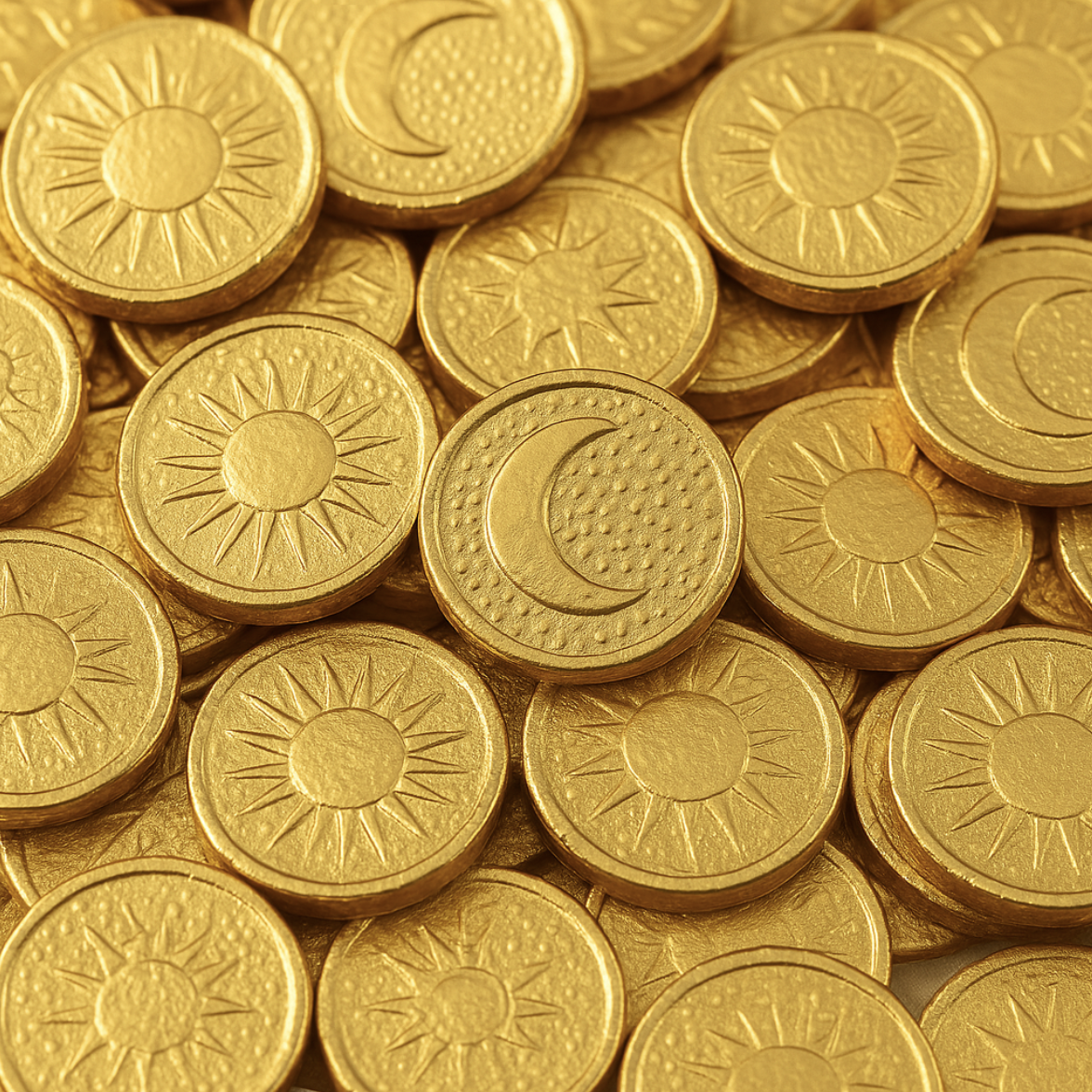
Sugar-Free Chocolate Gold Coins Recipe
Sugar-Free Chocolate Gold Coins Recipe
Ingredients:
1 cup cocoa butter (chopped or wafers)
1 cup unsweetened cocoa powder
1/2 cup powdered Swerve (adjust to taste)
1/4 tsp vanilla extract (optional)
Pinch of sea salt
Equipment:
Double boiler setup
Thermometer (digital instant-read is ideal)
Silicone spatula
or optional/alternate, wax stamp
Step-by-Step with Temperature Guide:
1. Melt the cocoa butter:
Set up double boiler with 1-2 inches of water, gentle simmer (not rolling boil)
Add cocoa butter to top pot
Target: 110-115°F - stir occasionally until fully melted
Remove from heat immediately when melted
2. Add dry ingredients:
Sift cocoa powder and powdered Swerve together first (reduces grittiness)
Add to melted cocoa butter off heat
Whisk vigorously to combine - it'll seize up at first, keep whisking
Temperature will drop to ~100-105°F - this is good
3. Return to heat briefly if needed:
If mixture is too thick to pour, return to double boiler for 30 seconds
Stir constantly
Keep between 95-105°F - you want pourable but not hot
4. Add vanilla and salt:
Stir in thoroughly
Final working temperature: 85-95°F - this is your sweet spot for molding
5. Pour into molds:
Work at that 85-95°F range
Tap molds gently on counter to release air bubbles
If chocolate thickens too much while working, briefly warm to 95°F again
6. Set in freezer:
5-10 minutes until firm
Let sit in freezer an extra 2-3 minutes after set
Remove and let warm gradually in molds for 2-3 minutes before unmolding
Temperature Management Tips:
Too hot (>115°F): Cocoa butter can separate, chocolate becomes grainy
Too cold (<85°F): Too thick to pour, won't fill mold details properly
Sweet spot for pouring: 90°F - flows easily, sets with good snap
Troubleshooting:
Grainy texture? Sift powders better, blend longer
Too soft? Add more cocoa butter (increases fat = firmer set)
Too bitter? Increase Swerve gradually
Won't hold shape? Temperature was too high when poured
This should give you firm coins with good detail that hold up at room temperature. The key is never letting cocoa butter get too hot and working in that 85-95°F range for molding.
Test a small batch first to adjust sweetness to your preference!
Chocolate Stamping Technique
Alternatively, I saw on etsy you can actally also get a wax stamp, and melt chocolate directly onto parchemnt (or a cookie) and stamp them individually!
See here and here for a video! Now I want to get into wax stamping letters! ha.
Chocolate Coin Stamping Method:
Best base options:
Parchment paper - works great, easy release
Silicone baking mat - even better, totally non-stick
Wax paper - can work but sometimes sticks
Acetate sheets - professional option, gives shiniest finish
Technique:
Drop the chocolate:
Use a spoon or small ladle
Drop controlled amounts onto your base
They'll naturally spread into rounds
Aim for nickel-to-quarter sized puddles
Wait for the right moment:
THIS IS KEY: Don't stamp immediately or when fully set
Wait 2-3 minutes until surface starts to set but chocolate is still pliable
Should look matte on top but still soft underneath
Test with your finger - should be tacky but not liquid
Stamp with wax seal:
Press firmly and evenly
Hold for 2-3 seconds
Lift straight up (don't twist)
If chocolate sticks to stamp, you went too early
If it doesn't leave good impression, you waited too long
Let fully set:
Continue cooling at room temp or move to freezer
Once hard, peel off parchment
Pro tips:
Chill your wax stamp in the freezer between uses - helps prevent sticking
Dust stamp lightly with cocoa powder for even better release
Make coins slightly thicker than you think - gives better stamping depth
Work in small batches so timing stays consistent
Temperature sweet spot for stamping:
Chocolate should be around 80-85°F when you stamp
That "just starting to set" phase
This method actually gives you more artistic control and that handmade look. Plus no waiting for molds to free up!
Getting Foil to Show the Stamped Image:
The challenge is that foil needs to conform tightly to see the relief underneath. Here are your best methods:
1. Burnishing technique (most effective):
Wrap chocolate coin in foil
Use a soft tool to gently rub/press foil into the stamped details
Best tools:
Clean finger with gentle circular motions
Soft cloth or microfiber
Makeup brush handle (rounded end)
Wooden spoon back
Work slowly - foil tears easily
The stamped areas will catch light differently, making design visible
2. Stretch the foil first:
Pre-stretch foil slightly by rubbing between your fingers
Makes it more pliable and conforming
Then wrap and burnish
3. Use thinner foil:
Traditional gold coin foil (like for chocolate gelt) is thinner than craft foil
Thinner = better detail transfer
Look for "chocolate wrapping foil" or "candy foil" specifically
4. Warm hands method:
Hold wrapped coin in your warm hands for 10-20 seconds
Chocolate surface softens very slightly
Foil conforms better
Then let it re-set
5. Double-layer technique:
First layer: Wrap and burnish to get foil into crevices
Second layer: Wrap smoothly over top for clean gold finish
First layer does the conforming work, second gives polish
Reality check though: Deep stamped details show better than shallow ones. If your wax seal creates deep relief (2-3mm), the foil will catch it beautifully. Shallow details (<1mm) will be subtler under foil no matter what.
Alternative idea: Skip foil and dust set coins with edible gold luster dust instead - shows the stamp perfectly and looks incredibly elegant.
Best Tools for Controlled Chocolate Drops:
Top choices (ranked by ease + consistency):
1. Small squeeze bottle with tip (BEST for consistency)
Plastic condiment bottles (like ketchup/mustard bottles)
4-8 oz size is perfect
Cut tip to desired opening size
Advantages:
Extremely consistent portions
One-handed operation
Easy to control flow
Can see chocolate level
Keeps chocolate warmer longer than piping bag
Cheap and reusable
How to use:
Fill with melted chocolate at 90-95°F
Squeeze controlled amounts
Keep in warm water bath between uses
2. Piping bag with large round tip
Advantages:
Precise placement
Professional look
Good control
Disadvantages:
Chocolate cools faster in bag
Two-handed operation (need to twist/hold)
Can be messy to refill
Harder to maintain temperature
Tips if using:
Use disposable bags (easier cleanup)
Cut large opening or use #12 round tip
Work quickly in small batches
Keep extra filled bags in warm water
3. Small ladle or measuring spoon (simplest)
Use same spoon each time (1-2 tablespoon size)
Advantages:
No special equipment
Easy to keep chocolate warm (leave spoon in bowl)
Very forgiving
Disadvantages:
Less precise than squeeze bottle
Requires more hand control
Can create "tails" when you lift
4. Cookie scoop (underrated option!)
Small 1-tablespoon cookie scoop
Advantages:
Built-in release mechanism
Very consistent portions
Clean drops
Disadvantages:
Need to keep scoop warm between uses
Slightly less control over placement
Temperature management tip:
If using squeeze bottle, you can actually keep it in a small slow cooker or heating pad set to low between batches to maintain perfect working temperature. Game changer for longer production runs.
Sizing trick: Pour your first "test coin," stamp it, let it set, then weigh it. Now you know exactly how much chocolate you need per coin and can replicate that weight/squeeze duration every time.