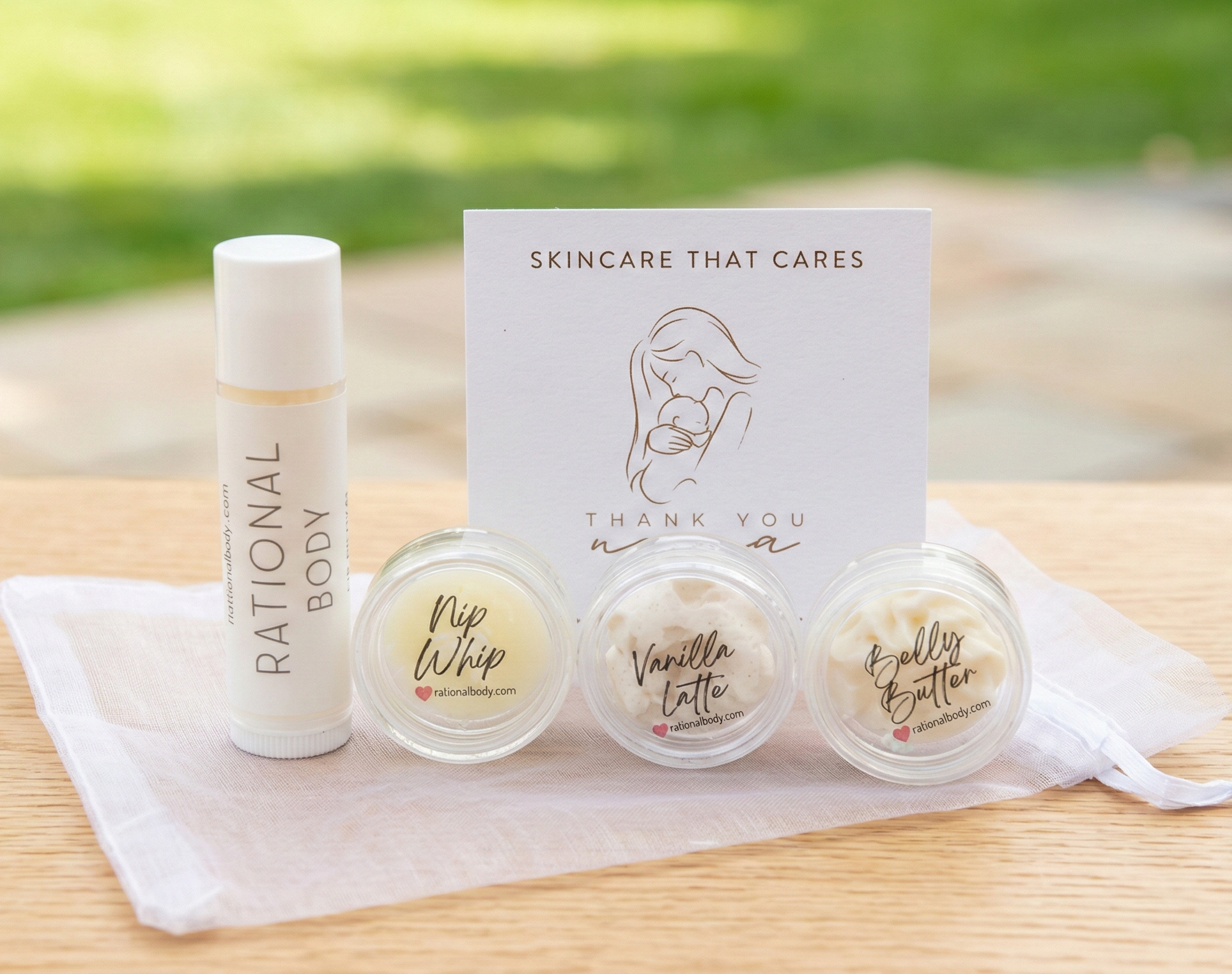
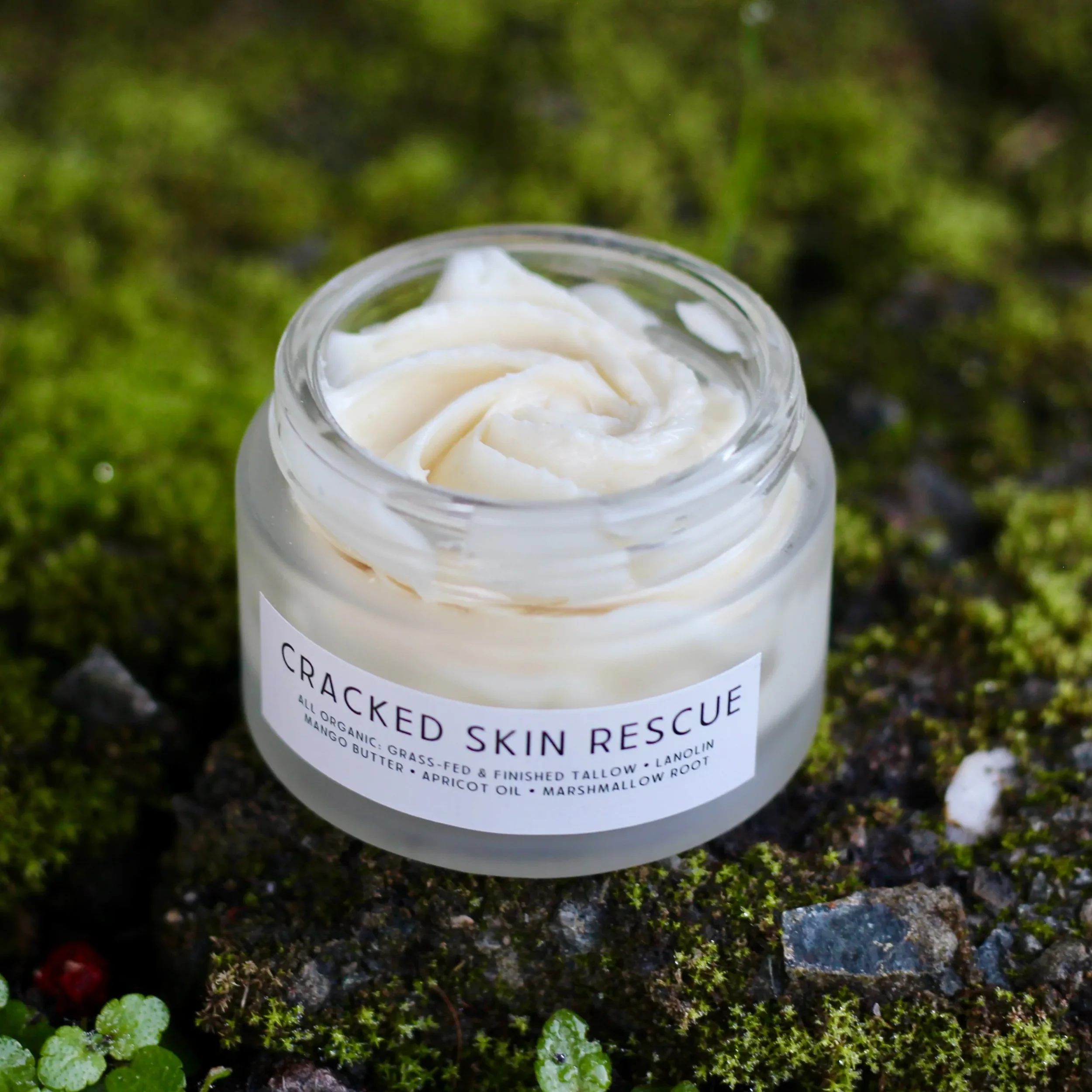
The Best Nipple Butter
The Best Nipple Butter — What's In It, What to Avoid, and How to Choose (or Even Make) Your Own
By Victoria Siegel, Founder of Rational Body
One of the things most requested for new mamas is a good nipple butter.
There seems to be something missing on the market. You either get 100% lanolin, a very healing oil extracted from wool, or some kind of lanolin-free plant-based product. Most women could benefit from it,
When you become a mama — or when you're preparing to become one — you quickly learn that your nipples are going through something they have never been through before. Breastfeeding is one of the most natural things a body can do, and it is also one of the most demanding. Cracked, sore, raw, and tender skin in one of the most sensitive places on your body, feeding a baby multiple times a day, every day.
You deserve something that actually works. Something safe for you and your baby. Something made with intention, not just marketing.
This article is my love letter to that. I'm going to walk you through every major ingredient you'll encounter in nipple creams, what the research actually says, which store-bought options are better than others, how to make your own at home if you feel called to, and why I formulated my Nip Whip (Whipped Nipple Butter) the way I did.
The best part? That healing cream can be used for any cracked skin, even your baby’s diaper rash, or your cracked fingers once these new moments are long over.
First — What Is Nipple Cream Actually For?
The goal of any nipple cream is to create a healing, protective, moisturizing environment for damaged skin while being completely safe for your baby. That second part matters enormously, because everything you put on your nipple has the potential to be ingested by your baby during a feeding.
This means no synthetic fragrances, no numbing agents, no petroleum, no alcohol - all things found in skin care that are surprisingly common.
You even want to be very thoughtful about essential oils, even the gentle-sounding ones. Consider lavender, one of the most widely used "calming" oils- it can stimulate hormone production. It’s oils, in practice, have stimulated the growth of breast tissue in young boys with daily use. Once removed for 30 days, that tissue reduces — but it's still a reminder that even natural doesn't always mean neutral.
Essential oils are surprisingly compact material often containing hundreds or thousands of a specific plant compound in a single dropper bottle, much more concentrated than ever found naturally in nature. And this is nothing when compared to the man made stuff.
One note, whenever considering using something on broken tissue, or your newborn’s skin, always perform a patch test first. Choose some skin, like the back of the arm or thigh, and apply a small amount, and wait a day or so to see if there is any kind of reaction. You never know if something can be irritating, and it is better to find out before applied to already aggricated skin.
The best product here can be dual purpose, for mom AND baby. If a bay has to potentially put their mouth on it, you want to make sure they do not react to it.
Also, a note on WHEN to apply. The best kind of skincare does not have to be removed before a baby puts their mouth on it. But your baby first and foremost wants YOUR scent. Anything with fragrance added should be avoided- for multiple reasons. The word “fragrance” on a label is a catch-all term, and can hide many different chemicals under “trade secrets”. And besides, your baby does not care about smelling something popular, it wants YOU. Mama. Anything else can distract or discourage them. So, if wanting to put something on your nipples, the best time to apply it is AFTER a feeding, or at least 20 minutes before, so the product has time to soak in. The product is for YOU, your nipple, not for the baby to eat, so try to keep it that way, no matter how “clean” it is.
The Ingredients — A Deep Dive
Here are a few ingredients often found in store-bought nipple care products. You will often find either lanolin alone, or plant-based products that avoid it entirely. Let’s break it all down.
🐑 Lanolin — The Classic
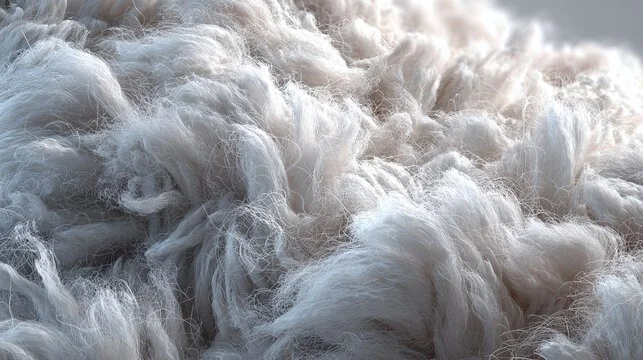
Lanolin is the most well-known nipple cream ingredient in the world. Once upon a time, shepards noticed their skin feeling incredibly soft after handling lots of sheep. Lanolin has been used for htousands of years to do just that- help provide an oil to well-worked hands. Lanolin itself is a fat secreted naturally by sheep's skin and harvested from wool, and it has been used by breastfeeding mamas for decades. Lanolin is the most-recommended product by lactation consultants and OBGYNs in the US, and there are real reasons for that loyalty.
What it does well: Lanolin creates a semi-occlusive barrier that traps internal moisture and keeps the skin in a moist healing environment. It doesn't contain preservatives, parabens, or added fragrance when properly purified. It's considered safe for baby and doesn't need to be removed before feeding when highly purified.
The complications: Pure lanolin alone is very sticky. It can be difficult to apply, can stain clothing and bedding significantly, and the texture alone can be off-putting for sensitive mamas. This is one reason that formulating it with complementary ingredients can make it so much more pleasant and effective to use.
Not all lanolin is equal. Conventionally processed lanolin can carry pesticide and detergent residues from the wool-processing stage. If you choose a lanolin product, look for HPA lanolin, which goes through a rigorous ultra-purification process. Lansinoh's HPA lanolin has tested with no detectable pesticide residues and extremely low levels of lanolin alcohols that can cause irritation. EU monograph-compliant lanolin ingredients are also worth seeking out.
Wool and latex sensitivities: Fewer than 1% of people have a true lanolin sensitivity, but if you know you react to wool or latex, avoid lanolin and look for products that do not include it.
There is also an interesting body of research worth knowing: One study found that women who used lanolin had a higher rate of breast infection compared to those who used nothing. Other research found it performed no better than routine care for nipple pain. I share this not to dismiss lanolin — it clearly works for many women — but because you deserve to make informed choices, not just follow what's handed to you at the hospital. There is always a chance that lanolin was used in conjunction with other products and problems, so hard to isolate as a singular problem, but worth paying attention to.
The bottom line on lanolin: When purified, it's a legitimate healing ingredient with a long history. But it works best when it's part of a thoughtful formulation, not standing alone.
🌿 Vegan Cacao Butter — Plant-Based Healing at Its Finest
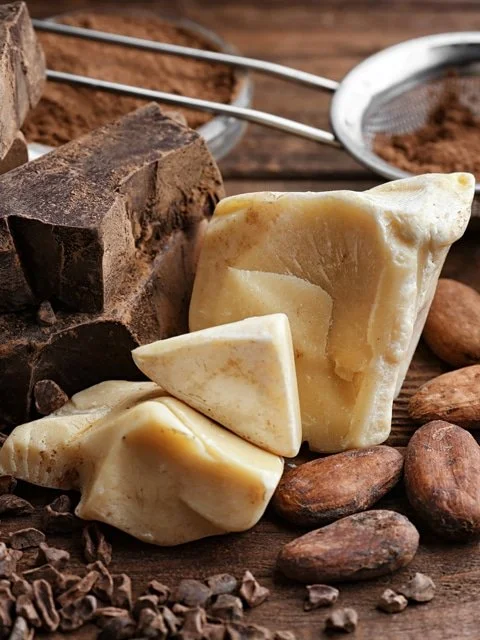
Cacao butter is the fat extracted from cacao beans — the same beans that give us chocolate — and it is extraordinary for skin. It's rich in fatty acids that soften and nourish, creates a beautiful protective barrier against environmental stressors, and has a natural scent that is warm, subtle, and deeply comforting.
Many plant-based butters and oils tend to act more as protective barriers — shielding the skin from wind, pollution, and moisture loss while delivering their own nourishing benefits. Together with animal-based ingredients they create something neither could achieve alone.
Cacao butter is also deeply moisturizing and has a long history of use in stretch mark prevention and healing, which is why it anchors my Belly Butter. It's safe for baby, comforting for mama, and luxurious every single time.
🍑 Apricot Oil — The Perfect Carrier
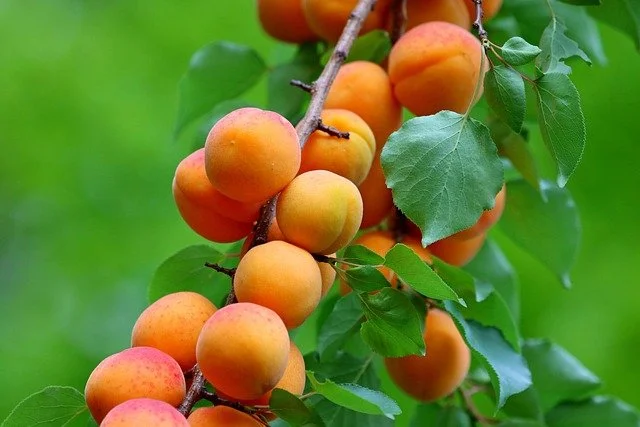
Before we talk about what gets infused into it, let's talk about the oil itself — because apricot kernel oil is quietly one of the most intelligent choices for a nipple butter base and deserves its own moment.
Apricot kernel oil is cold-pressed from the seeds of apricots and has been used in traditional skincare for centuries, particularly in Chinese and Ayurvedic medicine for sensitive and inflamed skin. It is light, absorbs quickly, and won't leave a heavy or greasy residue — which matters enormously when you're applying something to already-raw skin multiple times a day.
Its fatty acid profile — high in oleic acid (60–70%) — is remarkably similar to tallow's, which is why the two blend so naturally and beautifully. It's rich in vitamins A and E, which support healing and tissue repair. It is gentle enough for baby exposure. And critically — it is not estrogenic, making it a safe hormonal choice for a nursing mama's most sensitive skin.
It is also the perfect carrier oil for botanical infusions, which is exactly why I chose it. The calendula flowers and marshmallow root I infuse into it for six weeks transfer their healing properties deeply and completely into a base that the skin already loves.
🌻 Calendula-Infused Apricot Oil — The Golden Flower
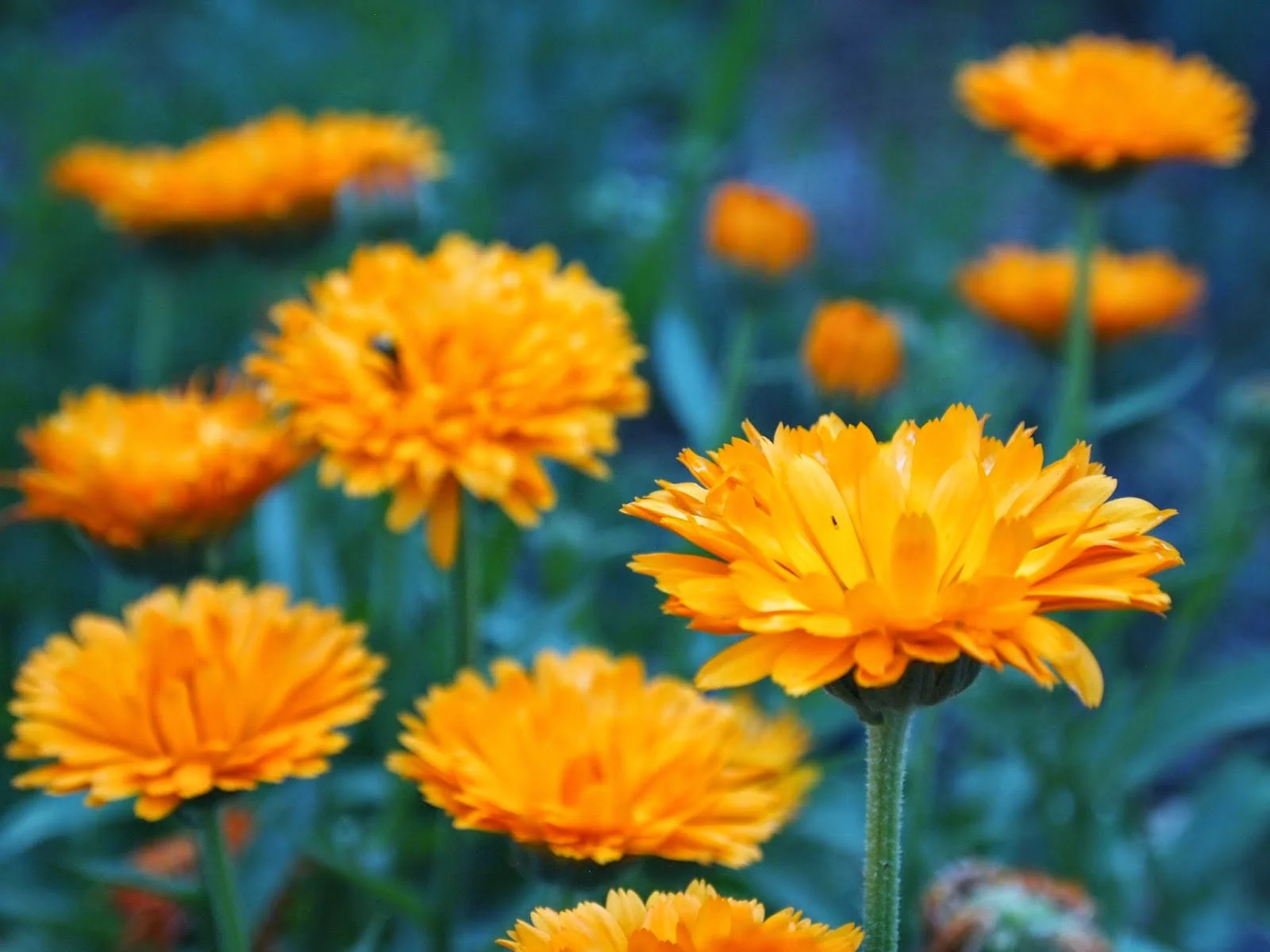
Calendula (Calendula officinalis), the bright golden flower also known as pot marigold, has been used medicinally for centuries across Egyptian, Greek, Roman, and Ayurvedic traditions. It is one of the most time-tested healing botanicals in human history.
Calendula stimulates collagen production and accelerates skin regeneration, making it effective for cuts, scrapes, burns, and surgical scars. It's safe for infants — it soothes irritation and creates a protective barrier on delicate skin. It's anti-inflammatory, antimicrobial, and wound-healing. It was used on soldiers' wounds in World War I. It has been used on cesarean scars. It is gentle enough for a newborn's diaper rash.
I infuse calendula into apricot oil — a light, nourishing carrier that is easily absorbed and gentle on sensitive skin. The infusion process extracts the medicinal properties of the flower slowly and intentionally, the way this ingredient has been used for generations.
🌾 Marshmallow Root — Ancient Softness, Modern Science
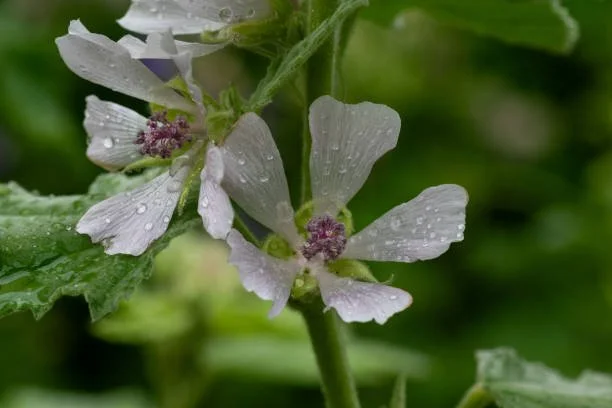
Yes, the candy was originally made from this plant. But the real marshmallow (Althaea officinalis — "Althaea" literally means "to heal") is something else entirely. Ancient Egyptians and Greek physicians used it for wound healing, and the reason has become clear through modern research.
Marshmallow root contains high levels of mucilage, which forms a protective film on the skin, preventing water loss and delivering long-lasting hydration. Its polysaccharides support skin barrier function, making it ideal for sensitive, eczema-prone, and compromised skin.
It works as a natural humectant — drawing water to the skin and holding it there. It's hypoallergenic, gentle enough for babies, and one of the most genuinely soothing things you can put on raw, irritated skin. Paired with calendula in an infused oil base, the two ingredients amplify each other beautifully
🐄 Tallow — Ancestral Skin Healing

Tallow is rendered beef fat, and before you scroll past that sentence, stay with me — because this is one of the oldest and most effective skincare ingredients in human history.
Your skin produces its own oils called sebum. Tallow's fatty acid profile — particularly its oleic, palmitic, and stearic acids — is remarkably similar to that of human sebum. This is why your skin recognizes and absorbs it so easily, carrying vitamins and nutrients deep into the layers of skin rather than sitting on the surface. Unlike many plant oils that are stopped by your skin's lipid barrier, tallow works with your skin's structure.
Tallow from 100% grass-fed beef is rich in fat-soluble vitamins A, D, K, E, and B12, as well as omega-3 fatty acids and conjugated linoleic acid (CLA). But that’s just the problem- 97% of cows in America eat more than grass, and that is ALL they should be eating.
Many of these nutrients come specifically from a grass-fed, pasture-raised diet — which is exactly why sourcing matters so deeply. Fats hold toxins, and you want the fat placed on and in your body from the cleanest possible sources.
The tallow we use in products comes from a farm called Primal Pastures in Southern California — happy, healthy cows eating only what cows are meant to eat, raised by people who treat their animals with genuine care and respect. Regenerative grazing like this supports soil health, helps restore ecological balance, and draws down carbon — so when you choose products made with regenerative tallow, you're participating in something far bigger than skincare.
Tallow is not vegan. It is VERY animal-based. But that does not have to be a bad thing. For mamas who prefer a fully plant-based option, there are many beautiful alternatives we talk about throughout this article.
Patch test note: A small fraction of people — less than 1% — may have a sensitivity to tallow, including those who have had Lyme disease. As always, patch test first, especially on sensitive or broken skin.
What to Look for on Store Shelves
If you're at a grocery store, or scrolling through Amazon at 3am and looking for a clean option to heal that broken skin, here's what to know:
Lansinoh HPA Lanolin is the most widely available and most rigorously purified lanolin product. It's a single-ingredient product and one of the better options in conventional stores, though as noted above, pure lanolin alone can be sticky and difficult to apply.
Earth Mama Nipple Butter is a well-regarded plant-based option using cocoa butter, shea butter, and olive oil. It's organic, lanolin-free, and doesn't need to be removed before feeding.
Motherlove Nipple Cream uses extra virgin olive oil, shea butter, beeswax, marshmallow root, and calendula — a combination that overlaps meaningfully with the philosophy behind my own formulations.
There are a few things to avoid on any label:
petroleum products (vaseline, mineral oil),
numbing agents, alcohol,
synthetic fragrance,
Chlorphenesin and Phenoxyethanol (these can cause respiratory distress or vomiting in infants),
unpurified lanolin
Vitamin E in high concentrations (which can be dangerous for babies in excess).
Why Store-Bought Forces You to Choose — And Why That's a Problem
One thing I noticed when I was looking for a quality nipple care product, was that the market has split into two camps. You either get all lanolin, or products that totally avoid it.
On one side you have 100% pure lanolin. It's rigorously purified, it's safe, and lactation consultants have recommended it for decades. But alone? It's sticky, and difficult to apply. I remember needing something desperately in the middle of the night, reaching for that single-use packet the hospital gave me, but it being too sticky to be able to apply. So I just skipped it. And I really needed it.
On the other side you have 100% plant-based options — organic cocoa butter, olive oil, shea, calendula, marshmallow root. Beautiful ingredients with real healing properties, but without the deep, skin-mimicking penetration that lanolin and tallow provide. They sit more on the surface, providing a barrier without the deep nourishment that comes with some wonderful age-old products.
Neither camp is wrong. But neither camp is complete.
This is exactly why I make my own — and why I formulated a product called “Nip Whip” the way I did.
The idea is to create a whipped creme-type lotion so you get the best of both worlds: the deep healing and skin-recognition of lanolin and tallow, alongside the botanical richness of apricot oil infused with calendula flowers and marshmallow root. The result is something no shelf product offers — something luxurious to apply, deeply healing, and intentionality in every single application.
When you can't find exactly what you need, sometimes you have to make it yourself. For when you don’t have the time for it, you can find it made by home made makers, like myself. But for those who have some time, or someone willing to make it for you, here is a quick recipe to make yourself.
Make Your Own — A Simple Nipple Balm DIY Recipe
If you want to make a basic nipple butter at home, here is a starting point. This is the kind of recipe I'd encourage any curious, crafty mama to try — and it's also a window into what goes into mine.
Simple Healing Nipple Butter Makes approximately 2 oz
½ oz HPA-purified lanolin (sourced from a reputable supplier — look for medical grade, organic-certified if possible)
¼ oz grass-fed tallow, rendered (sourced from a regenerative farm you trust — Primal Pastures is my go-to)
¼ oz mango or shea butter
½ oz apricot oil, infused with dried calendula flowers and marshmallow root for 4–6 weeks, or warm infuse for 2–4 hours on very low heat). To make yourself, start with:
8 oz apricot kernel oil
1.5 oz dried calendula flowers
1.5 oz dried marshmallow root (chopped or powder)
Cold infuse 6-8 weeks, strain well
To make:
Infuse: Place the herbs in a 16 oz ball jar, and fill with apricot oil so it covers all the herbs. Let sit in a cool, dark place, for 6 weeks. Shake daily. Once complete, strain the herbs and discard, and reserve the liquid for your recipe.
Melt: Gently melt the tallow over very low heat using a double boiler. Stir until fully liquid. Remove from heat.
Cool: Allow the mixture to cool until it reaches approximately 125°F — warm and still fluid, but no longer hot. Too hot and it can separate or turn greasy; too cool and it won't incorporate smoothly. Stir the lanolin in slowly and patiently until fully combined.
Add your botanicals: Once the lanolin is incorporated, add the herbal-infused apricot oil and stir gently to combine.
Cool for whipping: Pour into a shallow bowl or dish and allow to cool at room temperature for 20–30 minutes, or place in the refrigerator, checking every 10 minutes. You're looking for the mixture to be soft, opaque, and slightly solidified — like cool but still-spreadable butter. Not liquid, not hard. This is your whipping window and it matters — too warm and it won't fluff up, too cold and you'll get lumps.
Whip: Using a hand mixer or stand mixer on high speed, whip for 3–5 minutes until light, airy, and fluffy — the texture should resemble soft whipped cream.
If it's too hard to whip, let it warm at room temperature for a few minutes and try again. If it's too soft and liquid, return it to the fridge briefly.
Jar and label: Transfer to a small glass jar or tin. Label with the date. Use within a year. Store away from heat and direct sunlight — warmth will melt it back to a balm, which is fine for use but loses the whipped texture. Storage in the fridge is totally fine, and may actually feel kind of nice. If too cold to spread, just warm in hands before use.
For a vegan version: replace the lanolin and tallow with ¼ oz each of cacao butter and calendula-infused apricot oil. The result is a lighter, plant-based balm that still delivers beautiful healing and nourishment. Skip the temperature concern for lanolin and simply cool and whip as above.
No essential oils. No fragrance. No preservatives. Just what your skin — and your baby — actually needs.
Or, you can purchase these from my site called Rational Body.
Where I Source My Ingredients
Sourcing is everything. I don't use ingredients I can't stand behind.
Tallow: Primal Pastures, Murrieta, California — 100% grass-fed, pasture-raised, humanely treated cattle. These are cows that live as cows should. The tallow from animals raised this way is nutritionally richer and ethically sound.
Lanolin: Medical-grade, HPA-purified lanolin from a certified organic source — the same standard used by lactation professionals.
Calendula & Marshmallow Root: Organic, dried botanicals from trusted herbal suppliers prioritizing quality and clean growing practices.
A Note on Learning to Receive
I want to close with something that has nothing to do with ingredients and everything to do with being a mother.
I used to be someone who didn't ask for help. Who researched everything alone at midnight. Who felt like needing support somehow meant I was doing it wrong.
Pregnancy and new motherhood dismantled all of that for me.
There is so much to know. So much to learn. And the most important thing I can tell is that you don't have to figure it out alone. Whether it's choosing the right nipple cream, finding a Doula who truly sees you, or asking someone to pick up groceries so you can sleep — learning to accept support is one of the greatest gifts you can give yourself and your baby.
These products were made in that spirit. Not to overwhelm you with information, but to make the right choice easy. To take one thing off your plate, put something beautiful in your hands, and say: we thought about this so you don't have to worry about it.
Your body is doing amazing things for you- bringing life into this world. Help it do its thing.
Nothing is more important than supporting new mothers and their babies.
Don’t know where to start? Check out our New Mama’s Intro Pack for $10, or the Ultimate Gift Package for $100. Learn about them here. Gift it to a new mama, or gift it to yourself.
——-
Victoria is the founder of Rational Body, a line of clean, natural, small-batch skincare products handcrafted with mothers and babies in mind. She is an engineer, turned herbalist, turned mama, and an advocate for caring about what to put on, and in, our bodies. Shop her Nip Whip, Tallow Face & Body Balm, and Vegan Cacao Belly Butter at rationalbody.com .
Questions about ingredients, sensitivities, or custom formulations? Reach out at rationalbody@gmail.com . Always remember to patch test first, especially on broken skin or for baby.